

 Matthew Ehret
The statements, views and opinions expressed in this column are solely those of the author and do not necessarily represent those of this site. This site does not give financial, investment or medical advice.
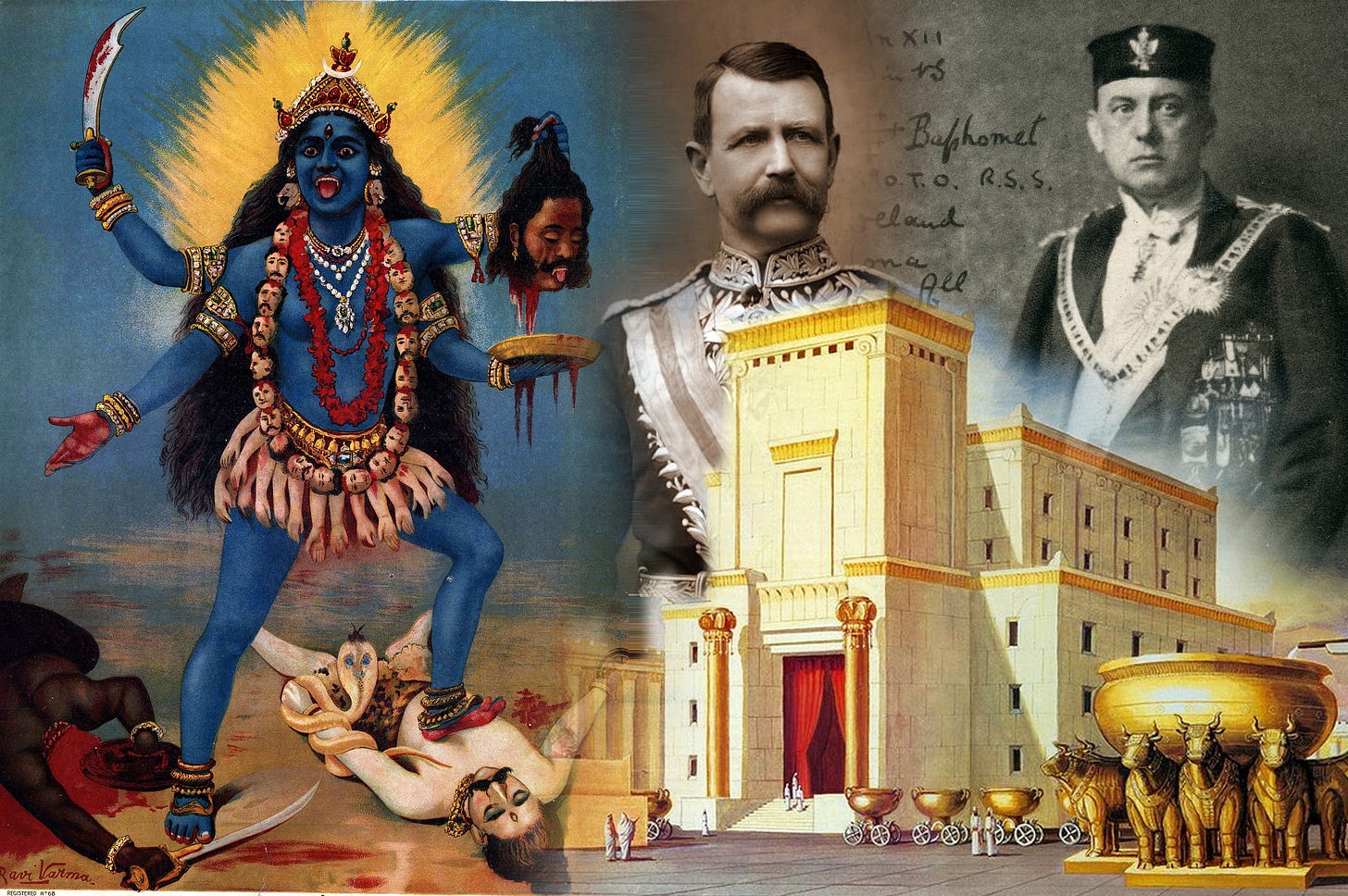
In the last two segments of this series (part 13 and part 14), we established that Sir Charles Warren, Grandmaster of the Quatuor Coronati Lodge, and London Metropolitan Police Commission from 1886-1888 was in direct communication with the principal black magician (Robert D’Onston Stephenson) behind the Jack the Ripper murders of 1888. We additionally established a much larger occult movement involving the Hermetic Order of the Golden Dawn and leading Theosophists in the gruesome ritual.
With these facts established, we may now embark upon the next phase of our exploration… The darker meaning of the Solomon Temple revival which both Warren and D’Onston Stephenson were involved in during the late 19th century.
We will also explore the deeper implications of the witches coven which D’Onston formed with two adepts of Theosophy’s Esoteric Section: Mabel Collins and Baroness Vittoria Cremers.
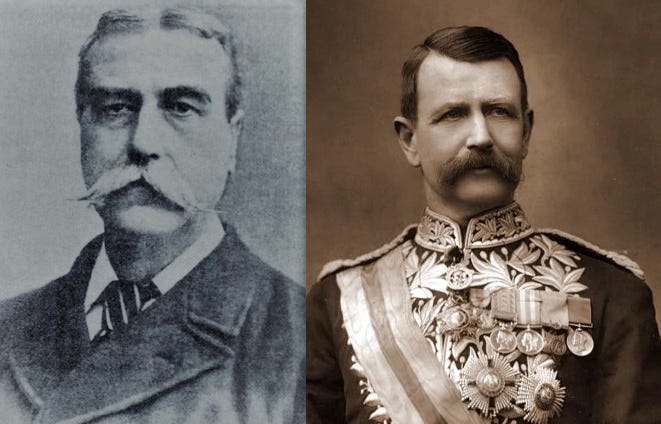
The Pagan Revival of Solomon’s Temple
What significance does Solomon’s Temple have in our story you ask?
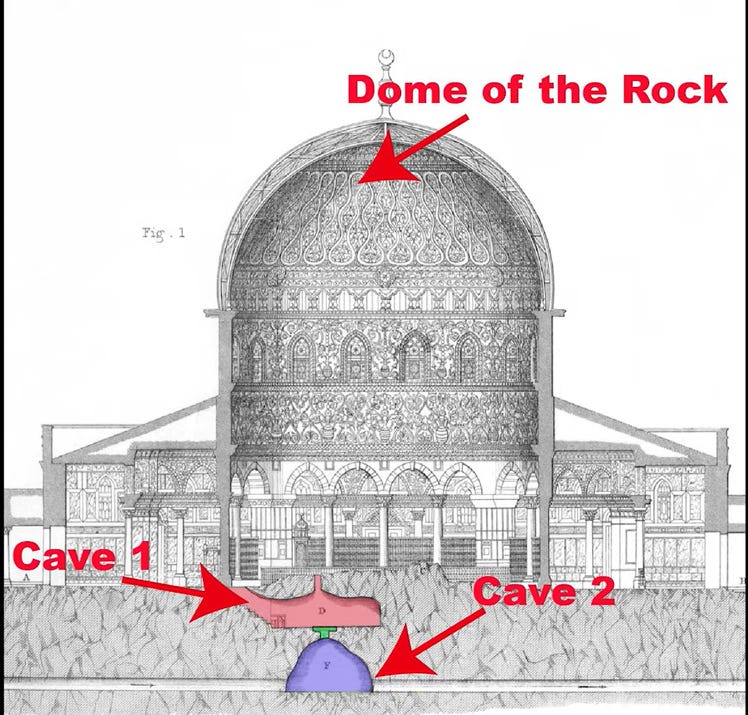
For one thing, Sir Charles Warren, leading excavator and expert on the vast catacombs under the Temple Mount- made it no secret that he believed Solomon’s Temple and the large rock under the Dome of the Rock on the Temple Mount to be the site of ancient pagan sacrifices.
On December 12, 1867, Warren even hypothesized that the two sub caverns and vast network of tunnels under the Dome of the Rock were specifically designed to carry away the blood of sacrificed victims from the temple and into the surrounding land of Jerusalem. Warren wrote:
“The discovery of a shaft down to the water of the virgin’s fount threw considerable light upon the object of the rock-cut canals about Jerusalem, as proving then as, had been conjectured by some, to have been for conducting away the refuse and blood from the temple.”
Warren was also clearly obsessed with the belief that the Temple not only featured Kaballistic proportions built up around the Vesica Pisces (aka: the geometric configuration of the Whitechapel murder victims of 1888), but was also certain that the temple was a vast complex of mass human sacrifice which he and other Rosicrucians believed to be a source of power to channel demonic forces.
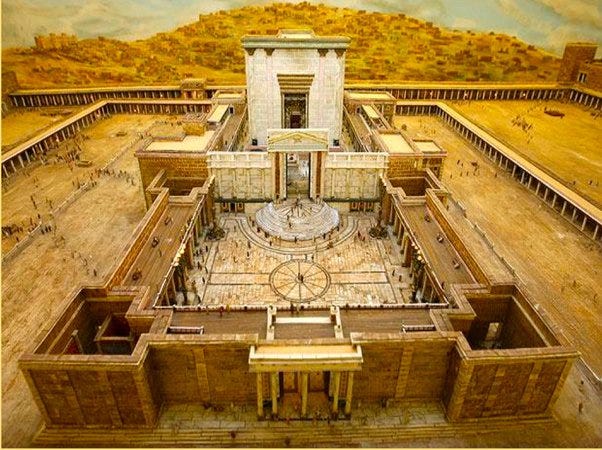
Warren’s obsession with Solomon’s Temple had less to do with anything popular Jews or Christians have read within the Old Testament, and much more to do with the fact that he (and all occultists associated with him) have promoted the belief that Solomon was not the monotheist King advertised in the old testament, but was a sorcerer king and overseer of occult sacrifices with a special devotion to the Sidonian deity Ashtoreth and Molech- the Canaanite deities of child sacrifice.
The deeper meaning of this occult interpretation of Solomon’s Temple will be addressed in the next installment.
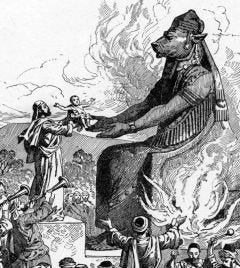
Contemporary Freemason (and author of The Secrets of Solomon’s Temple) Kevin Gest writes of the origins of Solomon’s name as a metaphor for the cult of the Sun and Moon (or light and darkness) stating: “Because of its special features, the temple became known as the ‘Temple of Sol and Amon’. Sol meaning Sun, Amon meaning Moon. After his death Jedidiah was referred to as the man who built the Sol and Amon Temple, which became corrupted over time to Sol-amon and then to Solomon.”
The Manichean obsession with integrating darkness with light
Recall from Part 10 of this series, that the cult of the sun and moon was a key attribute of Rosicrucian cosmology and all Manichean sects which presume evil and darkness to be infused with ontological power counterbalancing the forces of good and light requiring occult adherents to come to the unfortunate conclusion that evil is a necessary component for the good, meaning evil is in a sense the cause of good.
This Manichean cosmology not only found itself embedded within early gnostic mystery schools, but found fertile soil within various chivalric orders (both Christian and Muslim alike) which were seeded during the Crusades, and which also formed the basis of the rise of Rosicrucianism in the 15th century.
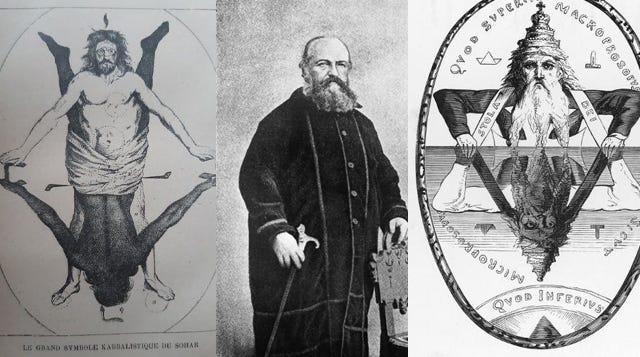
Some samples of Rosicrucian symbolism emphasizing the integration of opposites can be found below.
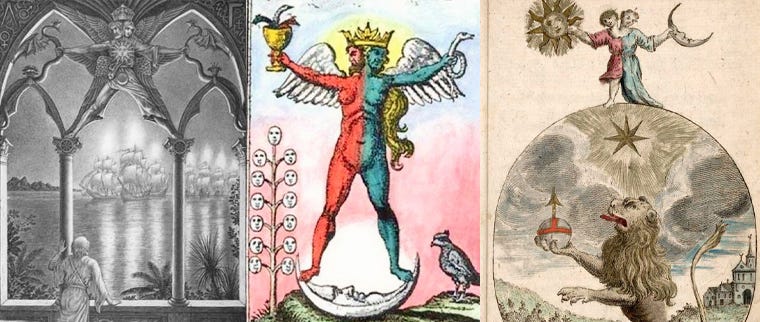
The un-natural “coincidence of opposites” in this sick worldview quickly leads its disciple into a belief that enlightenment can only be achieved by infusing moral opposites together in a bid for a perverse Tao of creative destruction.
This integration was central to the teachings of the most influential occultist and founder of the Alexandria Lodge of England (and the Rosicrucian Society of Anglia)… Sir Edward Bulwer-Lytton.
As we saw in our previous installment, Sir Edward was the mentor who initiated Robert D’Onston Stephenson into the dark arts in 1861, and it was Sir Edward’s occult “fiction” which both shaped the cosmology of the Theosophists as well as the Nazis.
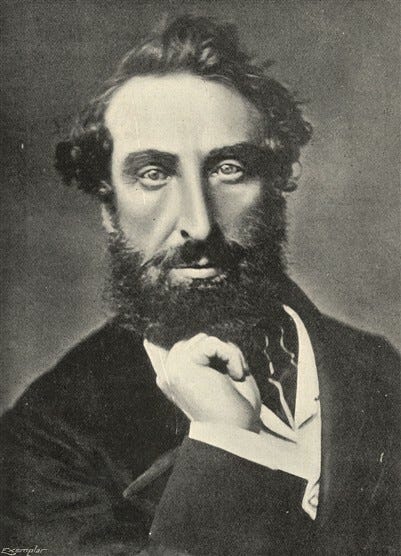
Nicholas Goodrick-Clarke writes in ‘The Occult Roots of Nazism’ that: “Madame Blavatsky discerned the unique source of their inspiration: the occult lore of ancient Egypt. Her fascination with Egypt as the fount of all wisdom arose from her enthusiastic reading of the English author Sir Edward Bulwer-Lytton. His novel The Last Days of Pompeii (1834) had been conceived of as a narrative of the impact of the Isis cult in Rome during the first century AD. His later works, Zanoni (1842), A Strange Story (1862), and The Coming Race (1871), also dwelt on esoteric initiation and secret fraternities dedicated to occult knowledge in a way which exercised an extraordinary fascination on the romantic mind of the nineteenth century. It is ironical that early theosophy should have been principally inspired by English occult fiction.”
The Integration of Good and Evil
Edward’s son Lord Robert Lytton followed in his father’s footsteps and enjoyed godlike power as England’s viceroy and Governor General to India from 1876-1880, during which time he sponsored the most luxurious feasts in the empire’s history, while simultaneously overseeing the enforced starvation of over 10 million Indians. This co-existence of gluttonous revelry with genocide was as unnatural as it was believed to be necessary by Robert Lytton.
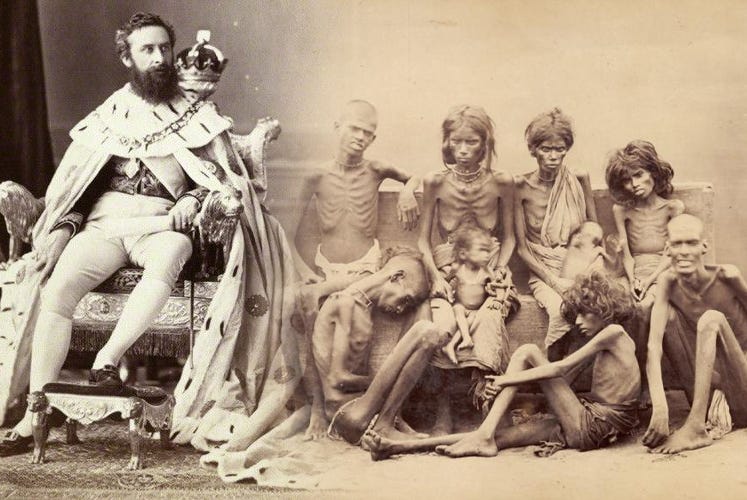
Author Jules Evans writes of Robert Lytton’s devotion to genocide:
“He [Lytton] was tasked with organizing the durbar to celebrate the crowning of Queen Victoria as empress of India. For this, he organized the largest meal in history, in which some 68,000 functionaries were fed.
While they feasted, millions of other Indians starved in the Great Famine of 1876–1878, a crop failure made much worse by Robert Lytton’s social Darwinian and Malthusian policies. He was, in his own words, ‘profoundly persuaded that every rupee superfluously spent on famine relief only aggravates the evil effects of famine, and that in all such cases waste of money involves waste of life.’
The British did provide some relief to the starving Indians, shepherding them into Malthusian ‘relief camps’ where they had to work for their food allowance. This allowance was fewer calories than prisoners would be given in Nazi camps, and the mortality rate in these relief camps was estimated at around 90%. Scholars estimate between five million and 10 million Indians died in the famine. Robert Bulwer-Lytton has been nicknamed ‘India’s Nero’ for his role in the ‘Indian holocaust’.”
The Ripper goes to India
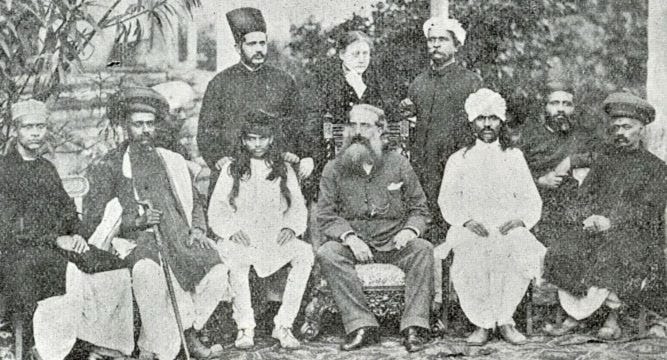
From 1877-1878, Robert D’Onston Stephenson lived in India where he was a personal guest of his childhood friend Lord Robert Bulwer, and it was during this time that D’Onston described in his 1893 autobiography how he discovered the true power of magic.
It is unknown if D’Onston or Robert Lytton met with either Madame Blavatsky or Colonel Olcott (or Edward Lytton disciple Franz Hartman with whom Meghan Collins collaborated in the German Theosophists) during this period. However, considering that the Theosophist headquarters were then being moved from New York to India, and considering the unprecedented access which Blavatsky, Hartman and Olcott enjoyed with ALL of the princes and Brahmin leaders of India during the exact period of Lord Lytton’s rein of terror over India, it is hard to believe that the hand of the British Empire was not a hidden facilitator in some important measure.
D’Onston Goes to Whitechapel
In the days prior to the Whitechapel killings of 1888, D’Onston had positioned himself perfectly to carry out the murders by admitting himself into London Hospital in Whitechapel (on July 27 1888) and discharging himself on December 7, 1888 (three weeks after the last murder).
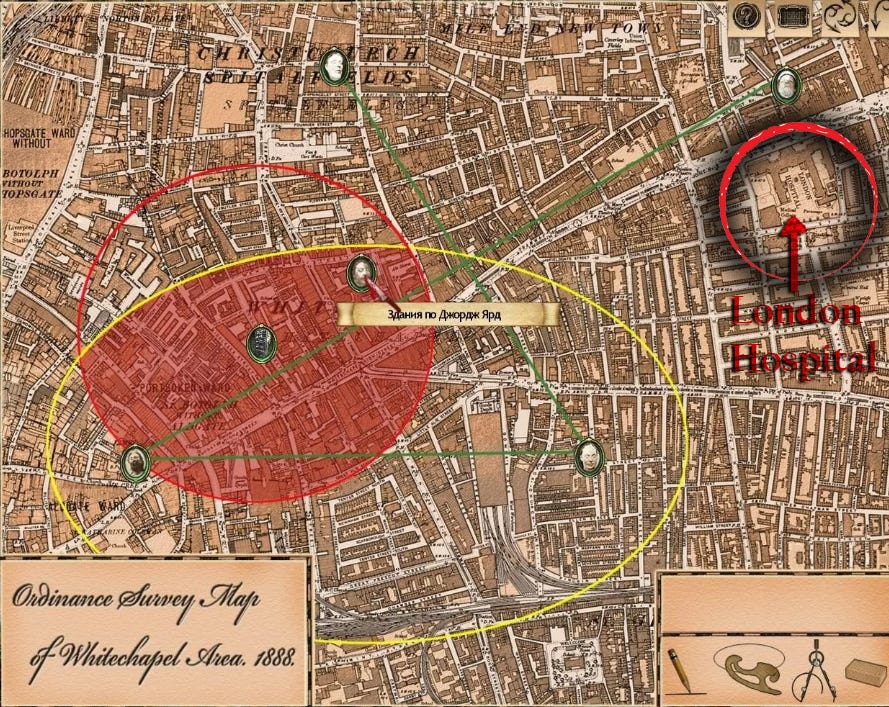
Author Melvin Harris notes that: “In 1888 the grounds of the London Hospital were extensive, they were also dotted around with temporary huts and sheds left over from the erecting of a nurses’ home and the enlargement of the medical college in 1887… Around the perimeter mature trees and bushes abounded. For the most part, simple railings set in low brick walls surrounded the hospital grounds and its college. These could be easily scaled in seconds by anyone with agility and determination. with the greenery as quick cover, entry and exit was an easy matter. This made the hospital an ideal staging-post for D’Onston’s series of premeditated killings.” [1]
During the murders, D’Onston additionally wrote articles for W.T. Stead’s Pall Mall Gazette (under the pseudonym Tau Tria Delta) where he was given free reign to spread disinformation about the identity of the killer, while also providing information about the killings which none but the murderer could have known. This got D’Onston into hot water as one investigator named George Marsh placed him as a top contender for the suspect’s list.
On December 1, 1888 D’Onston wrote an article for Stead’s Pall Mall Gazette titled ‘The Whitechapel Demon’s Nationality and Why He Committed the Murders” where he wrote:
“There seems to be no doubt that the murderer, whether mad or not, had a distinct motive in his mutilations; but one possible theory fo that motive has never yet been suggested. In the nineteenth century, with all its enlightenment, it would seem absurd, were it not that superstition dies hard, and some of its votaries do undoubtedly to this day practice unholy rites.
Now in one of the books by the great modern occultist who wrote under the nom de plume of ‘Eliphas Levi’, ‘Le Dogme et Rituel de la Haute Magie’, we find the most elaborate directions for working magical spells of all kinds. The second volume has a chapter on Necromancy, or black magic… Black magic employs the agencies of evil spirits and demons, instead of the beneficient spirits directed by the adepts of la haute magie. At the same time he gives the clearest and fullest details of the necessary steps for evocation by this means, and it is in the list of substances prescribed as absolutely necessary to success that we find the link which joins modern French necromancy with the quest of the East-end murderer.
These substances are in themselves horrible, and difficult to procure. They can only be obtained by means of the most appalling crimes, of which murder and mutilation of the dead are the least heinous. Among them are strips of the skin ofa suicide, nails from a murderer’s gallows, candles made from human fat, the head of a black cat which has been fed forty days on human flesh, the horns of a goat which has been made the instrument of an infamous capital crime, and a preparation made from a certain portion of the body of a harlot.”
W.T. Stead was so impressed by D’Onston’s style that he commissioned a series of articles from the magician published over the ensuing months. After many readers of the Pall Mall inquired into the identity of the author of this series of articles on West African black magic, Eliphas Levi and the Ripper murders, Stead wrote:
“The contributor in question, is an occultist of some experience. When he was a lad of eighteen, he studied necromancy under the late Lord Lytton at Alexandria. It would be odd if the mystical lore of the author of ‘Zanoni’ were to help to unearth Jack the Ripper.”
Two Witches Get in Bed with a Sorcerer
As the story goes, after reading this article, Mabel Collins- having just left the Theosophists, reached out to W.T. Stead to inquire into the identity of the author.
Stead happily obliged by introducing her to Robert D’Onston Stephensen. Mabel Collins later wrote of Stead’s assistance and her impression of the man saying: “some weeks passed by before I heard anything and then a letter arrived from a Dr. D’Onston making an appointment—a marvelous man […] a great magician who had wonderful magical secrets” [2]
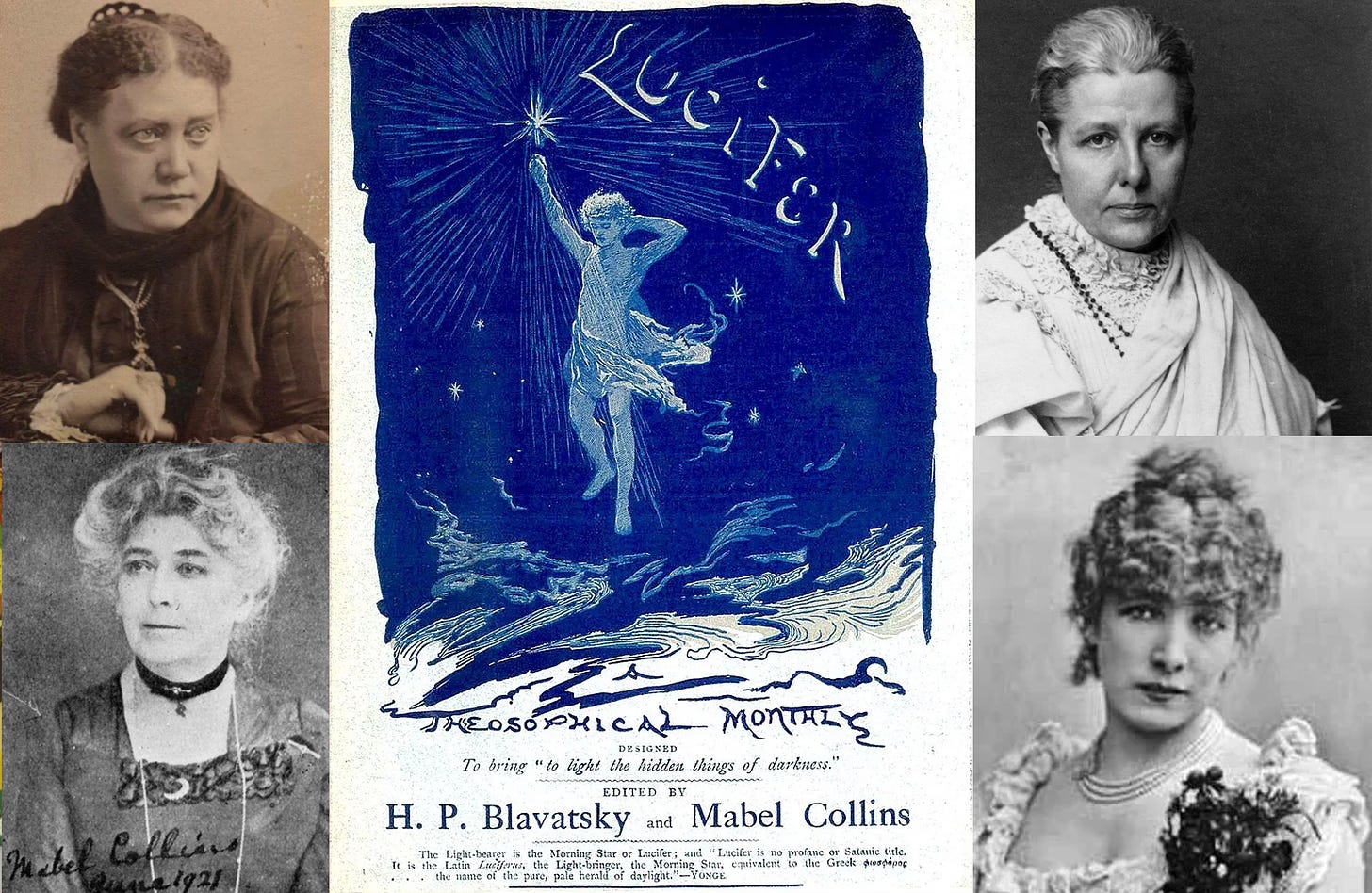
By February 1889, Baroness Vittoria Cremers returned to London from a business trip to New York, only to find that her old mentor Mabel Collins had left the Theosophists and was now living with D’Onston in a building on Baker Street. Cremers then had a meeting with Madame Blavatsky who informed her that she had the choice of remaining a Theosophist or stay loyal to Mabel Collins resulting in Cremers leaving the cult in order to live with her Collins and D’Onston. Strangely Blavatsky asked Cremers to remain the manager of the Lucifer publishing business.
During her interviews with journalist Bernard O’Connell in 1943, Vittoria Cremers stated of Robert D’Onston:
“After the last of the murders, an article appeared in the newspaper of W. T. Stead, the Pall Mall Gazette, by Tau Tria Delta [pseudonym of D’Onston], who offered a solution for the motive of the murders. It stated that in one of the grimoires of the Middle Ages, an account was given of a process by which a sorcerer could attain “the supreme black magical power” by following out a course of action identical with that of Jack the Ripper.”
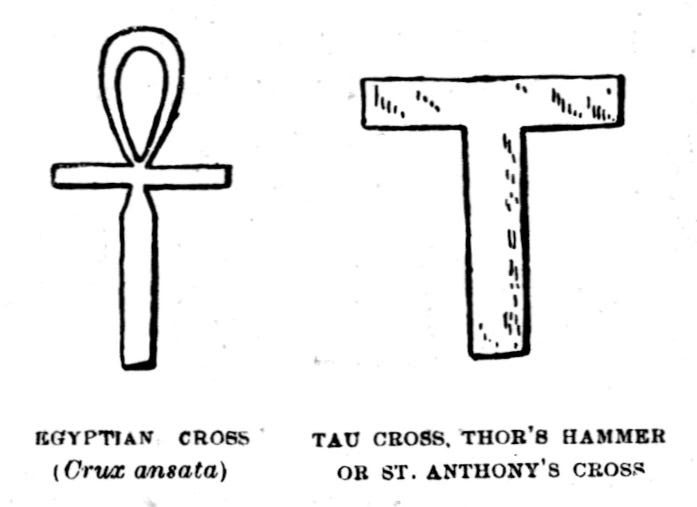
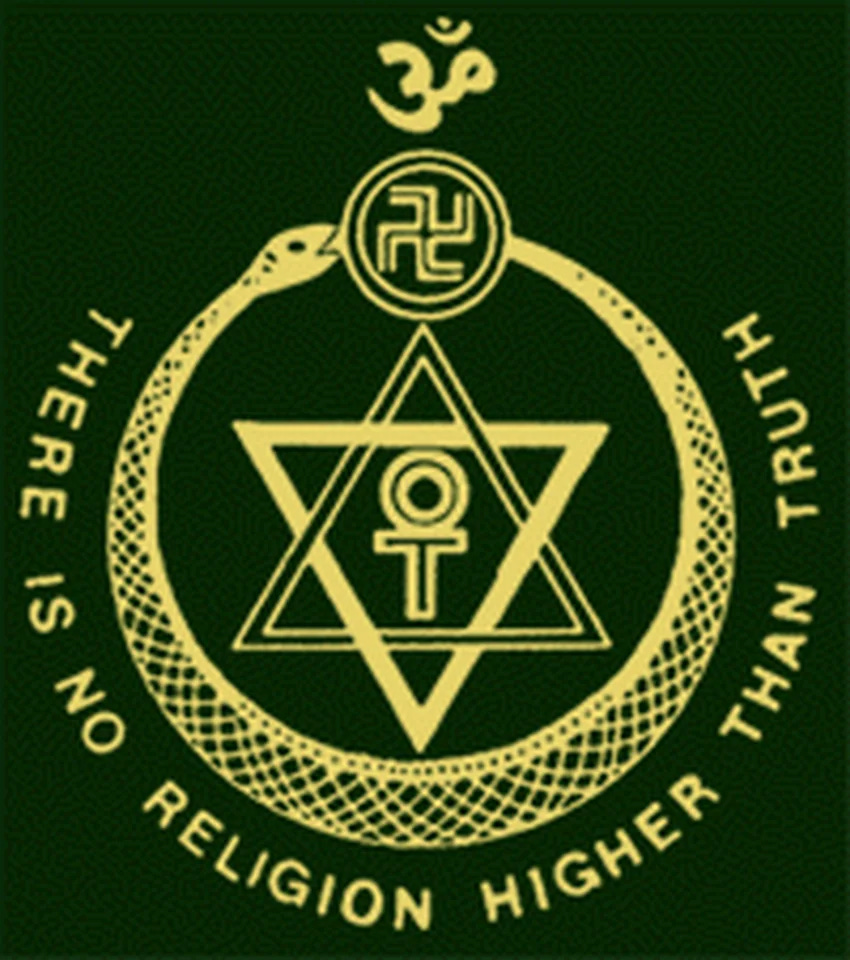
The pen name ‘Tau Triadelta’ first used by D’Onston in his African Magic article for Lucifer Publishing in 1890 signified ‘Cross with Three Triangles’ in Hebrew and Greek. The Tau was also the Egyptian form of a cross and in 1890 became the victorian reference for nominal ‘Bishops’ of the gnostic movement in Paris that had followed the rosicrucian teachings of Eliphas Levi and Edward Bulwer-Lytton. The Tau also plays a prominent role in the official emblem of Theosophy as designed by Blavatsky and Olcott in 1875.
In her memoires, recounted to Bernard O’Connell in 1943, Vittoria Cremers explained in detail how, in the wake of the Jack the Ripper murders, she, Mabel Collins and D’Onston went into business in a building at 17 Upper Baker Street. It was at this location that the trio lived together and created a short-lived Pompadour cosmetics company with D’Onston generating the formulas for the line of feminine products and both Mabel and Collins carrying out the business and marketing.
Beyond the obvious mystery of what D’Onston chose to put into these cosmetics, an important anomaly remains the peculiar location which the trio of witches selected for their living space and business.
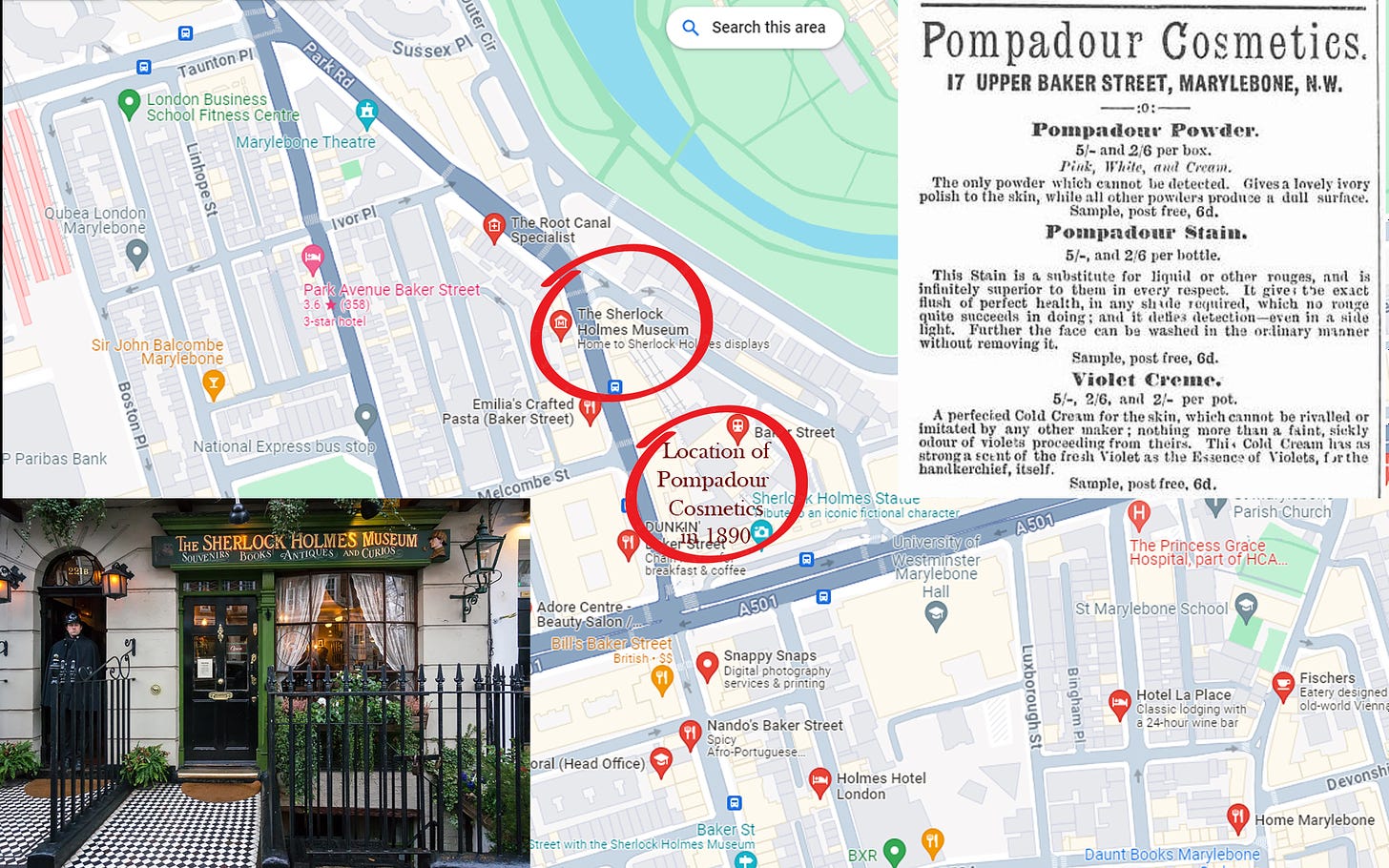
For only two buildings down from the Pompadour Company is 221 Baker Street… which just so happens to be the exact location which Hermetic Order of the Golden Dawn member Sir Arthur Conan Doyle selected for the home of Sherlock Holmes… a full year before the Whitechapel murders began! [3]
The parallels to Sherlock Holmes don’t end here, either but in his December 1888 Pall Mall article, D’Onston used the following phrase to describe the Jack the Ripper mystery saying:
“In endeavoring to sift through a mystery like this, one cannot afford to throw aside any theory, however extravagant, without careful examination, because the truth might, after all, like in the most unlikely one.”
Sherlock Holmes readers might be reminded of the famous line “When you have excluded the impossible, whatever remains, however improbable, must be the truth”.
Perhaps an innocent coincidence… and perhaps not.
W.T. Stead and The Pall Mall Connection
As already mentioned, W.T. Stead had written an introduction to D’Onston’s 1893 autobiography saying: “For more than a year I was under the impression that he was the veritable Jack the Ripper; an impression which I believe was shared by the police, who, at least once, had him under arrest.”
Since the very start of our story, the figure of William Thomas Stead and his Pall Mall Gazette have played an incredibly influential role in both shaping the minds of the English media consumers, but also providing a hub for the highest echelons of the British Empire’s grand strategists to operate.
Among Pall Mall’s writers during this period of the Ripper Murders we find H.G. Wells, Annie Besant, Lord Alfred Milner, Arthur Conan Doyle, Bram Stoker, Madame Blavatsky, Mabel Collins, Lord Balfour, Vittoria Cremers, and literally every influential member of the Golden Dawn, Theosophists and Quatuor Coronati Lodge members.
So who is this W.T. Stead exactly?
William Thomas Stead (1849-1912) has become known as the father of tabloid journalism and mentored American media mogul William Randolph Hearst in the arts of ‘government by journalism’. Stead was also connected to British Imperial genocidalist Cecil Rhodes, who bankrolled his influential Pall Mall Gazette which became a mouthpiece for imperial re-organization at the end of the 19th century.
Upon becoming Editor-in-Chief of the Pall Mall Gazette in 1888, William T. Stead immediately recruited a young Alfred Milner (later co-author of the Balfour Accords) who was made Associate Editor.
The Gazette’s function was set out in the Pall Mall Gospel, a short mission statement which Stead demanded all of his employees abide to: “The Federation of the British Empire is the condition of its survival… as an Empire we must federate or perish.” The gospel also propagandized for the “inevitable destiny” that the USA and Britain “coalesce” [4].
The role which the Pall Mall played in coordinating a cohesive vision of empire was the model followed by Milner and his minions later as they ran the Round Table periodicals. Stead was officially recruited to the grand design in 1889 which was instigated by Rhodes and his sponsor Lord Rothschild.
It was when Stead had been recently released for prison due to his Gazette’s promotion of “organized vice” only to find his paper in serious financial trouble, when he was first called upon by Cecil Rhodes, a long time follower of his journal in South Africa. After their first meeting, Stead ecstatically wrote to his wife:
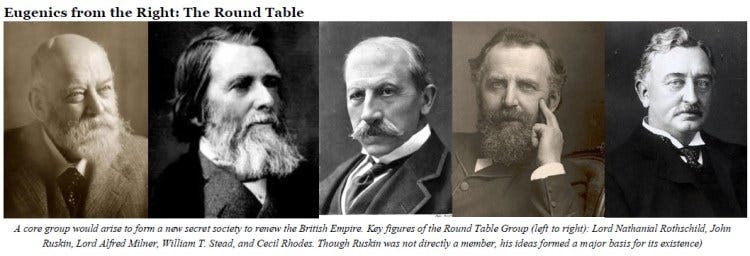
“Mr. Rhodes is my man! I have just had three hours talk with him. He is full of a far more gorgeous idea in connection with the paper than even I have had. I cannot tell you his scheme because it is too secret. But it involves millions. He had no idea that it would cost £250,000 to start a paper. But he offered me down as a free gift £20,000 to buy a share in the P.M. Gazette as a beginning… His ideas are federation, expansion, and consolidation of the Empire…. He took to me. Told me some things he has told no other man—save Lord Rothschild— and pressed me to take the £20,000, not to have any return, to give no receipt, to simply take it and use it to give me a freer hand on the P.M.G. It seems all like a fairy dream….” [5]
Stead’s ‘New Journalism’ involved pioneering investigative reporting at the service of the British Empire by exposing inhuman crimes of Spanish, Belgium and French empires oversees, while typically letting his beloved British Empire consistently off the hook.
In 1885, Stead was caught in a police sting operation attempting to purchase a child for sex and when he found himself in court, used his newspapers to make the case that it was actually Stead himself who had ‘caught’ the London police for their crime of allowing rampant child sex traffic to go unpunished (of course, Stead ignored the case of his own arrest while making his argument).
By the end of the affair, his media campaign was a success and Stead was able to avoid jail time while also being celebrated as a national hero for exposing police incompetence on the issue of stopping child sex trafficking.
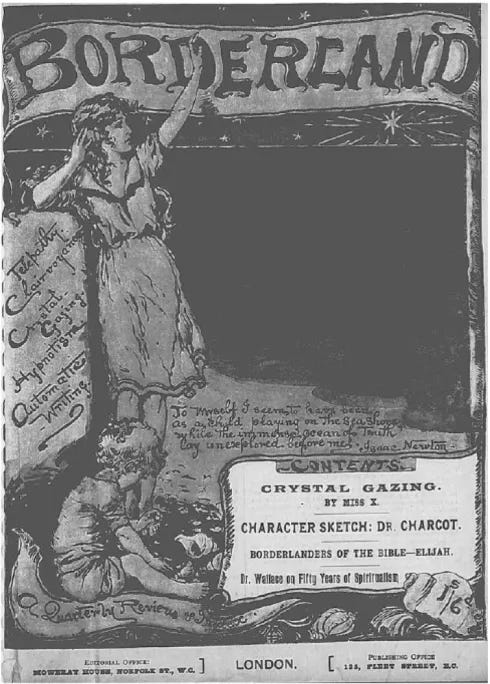
It is also noteworthy for this story that W.T. Stead was also a practicing occultist whose journal Borderlands featured stories of the paranormal (including several works on black magic by Robert D’Onston Stephenson) while his Pall Mall Gazette featured both scandalous tabloid articles and cases of spiritualism, necromancy and black magic.
It was in the midst of Blavatsky’s scandalous fall from grace that W.T. Stead commissioned Pall Mall Gazette author Annie Besant to write a review of Blavatsky’s 1888 Secret Doctrine.
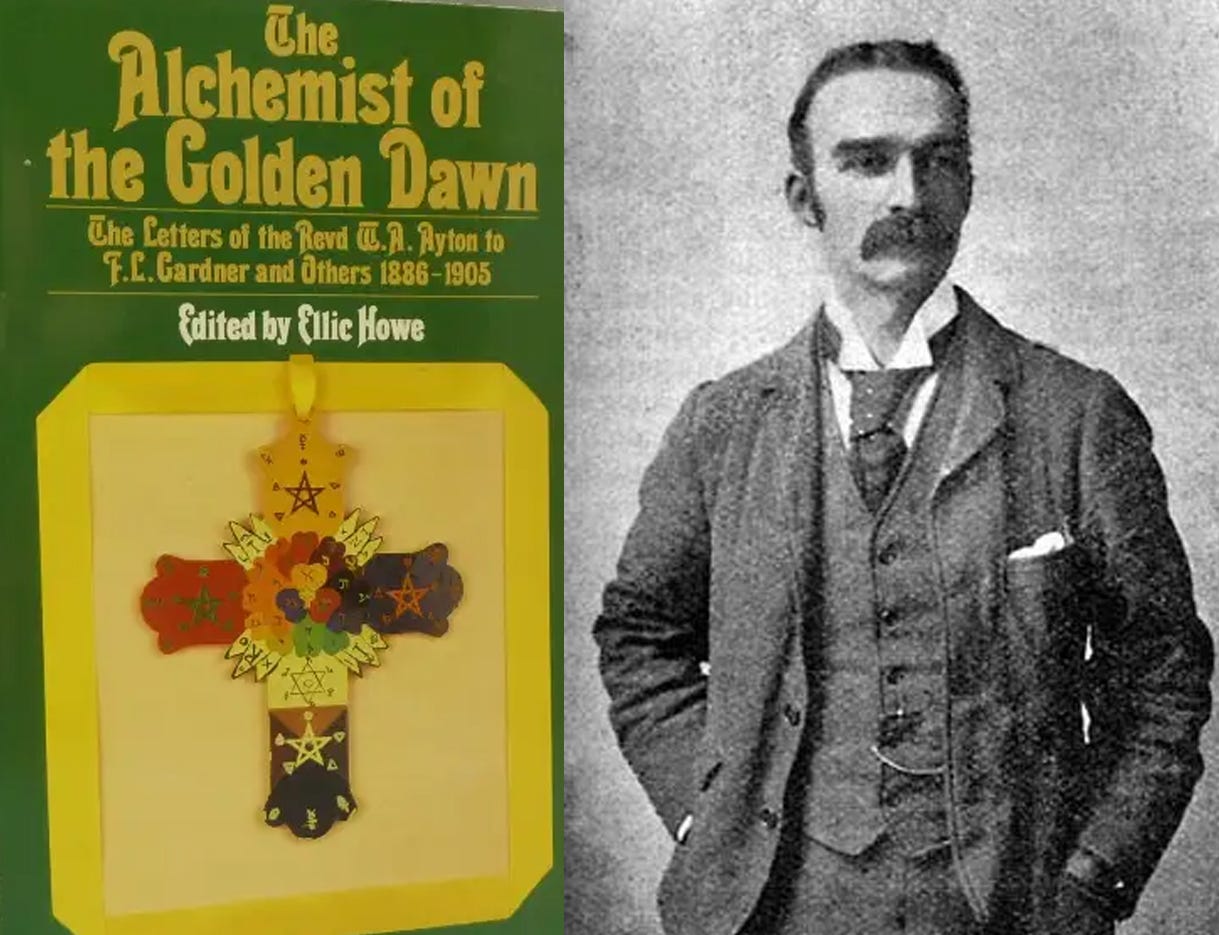
Besant’s review won an audience with Blavatsky and the machinery of her deification as the new guru of the syncretic movement was set into motion. Ayton writes of Besant’s quick rise to prominence in the order:
“Annie Besant was soon deeply involved in Theosophical Society business and by the summer of 1889 was practically running the Blavatsky Lodge. She became co-editor (with H.P.B.) of Lucifer in September 1889. Burrows was also active in T.S. affairs. By 1891 they considered themselves sufficiently expert in Theosophical doctrines to appear as co-authors of A Glossary of Theosophical Terms. Annie Besant was clearly destined to be H.P.B.’s successor as Theosophy’s leading figure in Great Britain and even internationally, and this in fact happened after Blavatsky’s death.”
The Esoteric Section is Born
It is important to hold in mind that it was during the peak of the Jack the Ripper killings (specifically on October 9, 1888) that American Theosophist Colonel Olcott formally established the Esoteric Section of the Theosophist religion in London featuring Mabel Collins, Macgregor Mathers, John Yarker and William Wynn Westcott among its early members.
In 1889, both Annie Besant and Vittoria Cremers- two new members were made editors of Lucifer Magazine and promptly inducted into this elite group of practicing sorcerers.
While the outward (exoteric) face of the Theosophists studied the theory of the new spiritualism, the esoteric section would engage in ‘practical’ magic- synthesizing shamanistic, tantric, alchemical and other rituals taken from various cultures studied by these new magi. Unlike the regular Theosophical Society, the Esoteric Section’s ‘practical magical rituals’ would be kept in total secrecy even from un-initiated members.
In his autobiography, Westcott- who also worked with Sir Charles Warren as London Coroner during the ripper murders, wrote of the fusion of the Esoteric Section of the Theosophists and the Golden Dawn:
“The late Madame Blavatsky, my esteemed teacher of Theosophy, and my personal friend, at whose suggestion a friendly alliance between the Hermetic Order of the Golden Dawn and the Inner Group of Theosophic students was made, expressed to me her recognition of the value of the “Sepher Yetzirah” as a mystical treatise on cosmic origin, and her approval of my work in its translation, and of my notes and explanations.” [6]
At this time, the Theosophists arranged to have an ‘esoteric Christian’ outward teaching for the un-initiated led by Anna Kingsford (later to be picked up by Steiner in his breakaway Anthoposophists in 1912) and an inner secret core for initiates based upon a Chaldeo-Tibetan occultism called ‘Arhat Esotericism’. [7]
It appears that this Tibetan occultism promoted by the Theosophists was also infused with Egyptian black magic and Indian Tantric black magic rituals that had been espoused by Kali cultists for over a millenium. Like the mysteries of black magicians which had been explored by the British Empire in West Africa, and like the mystery cults of Ismaili assassins which had been active in Persia and Egypt since the earliest years of Islam, the Indian culture featured its own pagan mystery cults with Kali assassins operating tantric black magic rituals for centuries.
Kali and Tantric Black Magic
The Kali mystery cult has been centered around a female deity who is known as the goddess of destruction, death, and time, serving in some measure as an eastern female counterpart to the Greco-Roman god Saturn/Chronos.
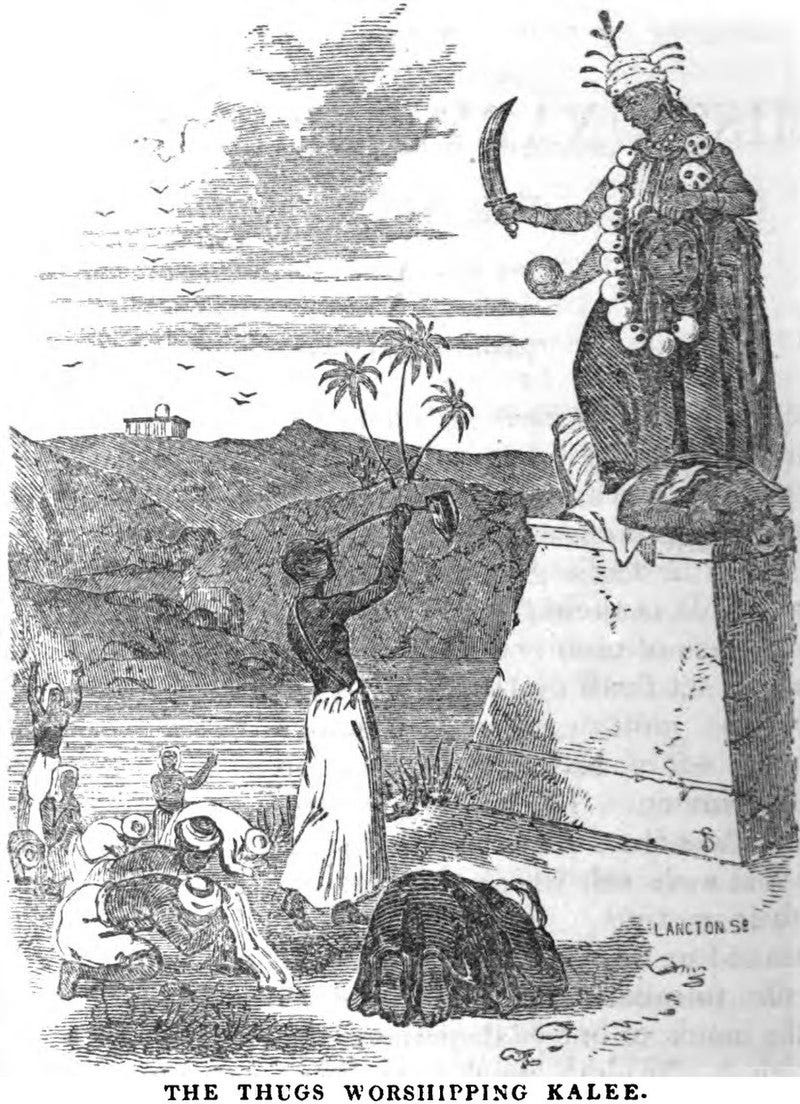
Likened in some ways to the earth mother (magna mater) goddess Cybele, Demeter, or Isis, Kali is featured typically naked and adorned with the severed heads, and limbs of her victims. She is also typically portrayed standing above her de-masculated husband Shiva (akin to the portrayal of Attis as counterpart to Cybele in the west) who is featured in a catatonic state below her feet with a snake (implying snake venom used in occult rituals).
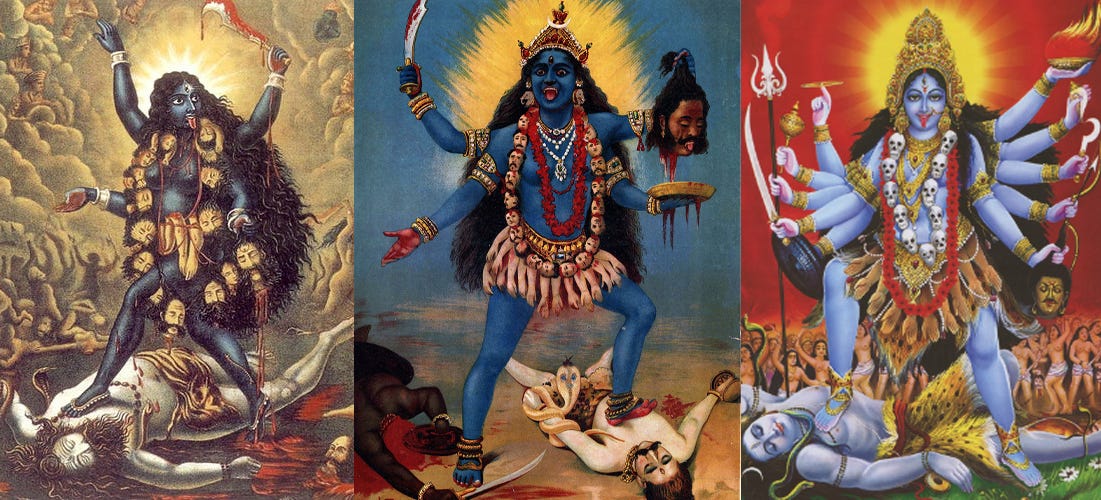
A combination of creation and destruction through sex and murder along with altered states of deified schizophrenic personality disorder are important elements to this cult which was known for human sacrifice, child abduction and sacred orgies throughout the centuries. To this very day thousands of children continue to be sacrificed to Kali across India.
Beginning in the early 1300s a Kali cult of assassins came to light in the Indian subcontinent in the form of a secret order of Thuggees (meaning ‘deceivers’ in sanskrit).
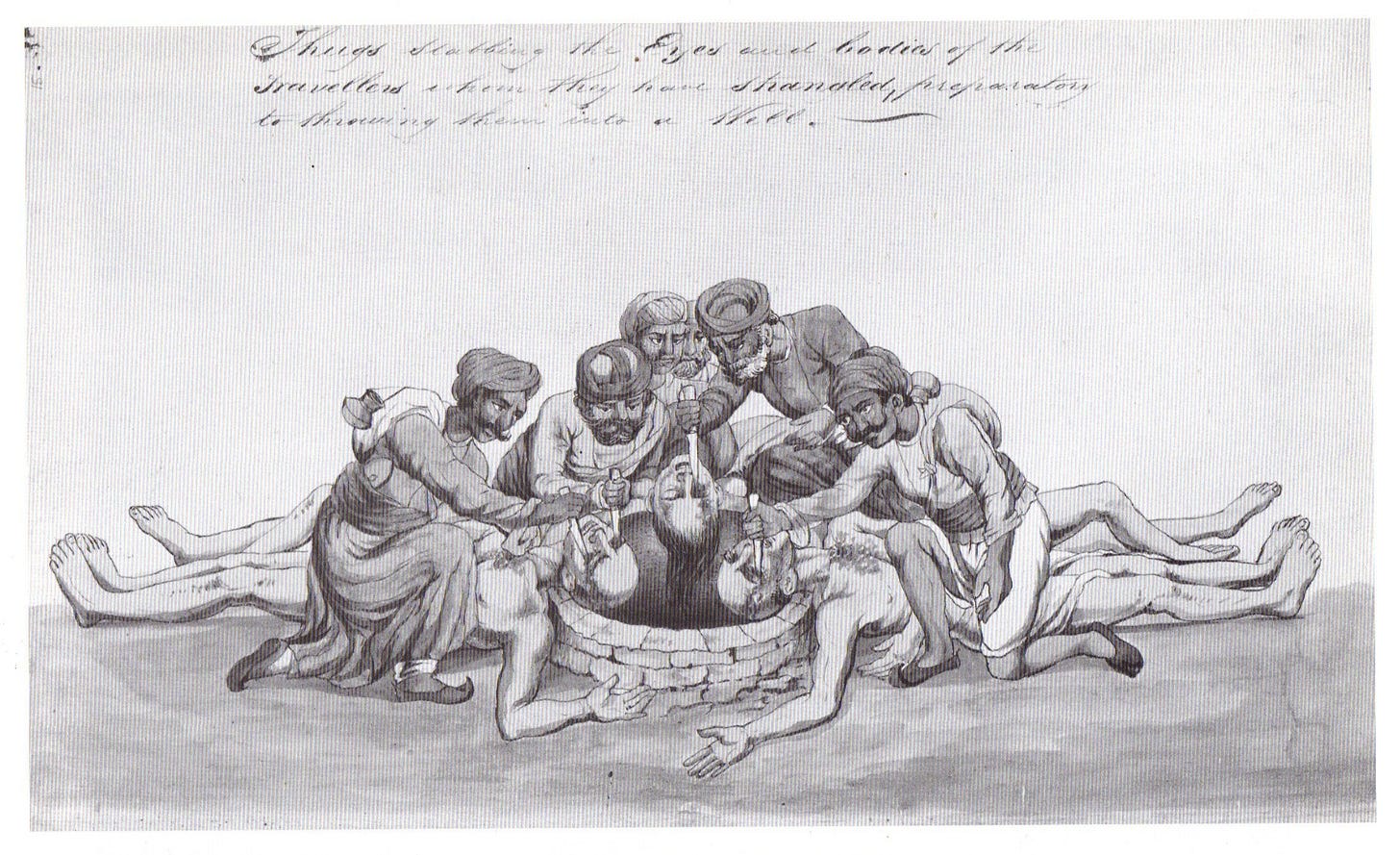
This vast network of assassins which proliferated from its earliest mention in 1352 (not long after the extermination of Nizari Ismaili Assassins who also penetrated the Indian subcontinent)… until the late 19th century, as a highly disciplined cult which believed that systemic ritual murder and theft was a divine responsibility in their worship of Kali. The cult has been identified as one of the earliest organized crime syndicates, murdering up to 40,000 victims per year in their obsession with pleasing Kali.
The British Empire was known as ‘The empire on which the sun never set’ for centuries due to its global influence and penetration of every cultural group on earth.
It was observed by leading strategists of the British Empire during the 19th century, that many common rites, rituals and beliefs of the various occult movements of the world stretching from Africa, to Tibet, India, Egypt and beyond had common traits and could be combined into a global world religion (featuring an inner and outer belief structure).
One particularly important figure studied by the Theosophist’s inner core was a guru named Sri Sabhapati Swami and a school known as Sivarajayoga.
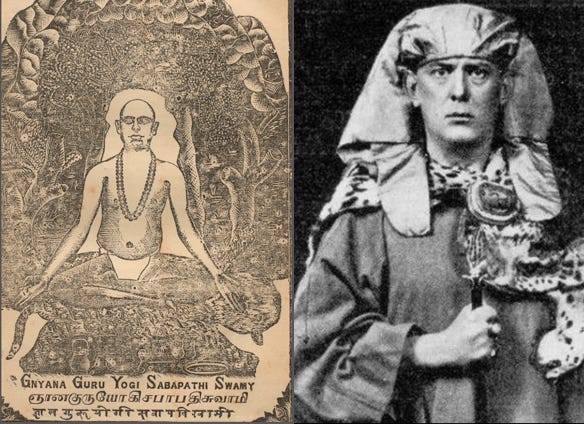
The Indian guru Sri Sabhapati met extensively with Blavatsky and Olcott in 1880, sent numerous students to become initiates of Theosophy in Adyar, India, and set up an inner and outer teaching system which Golden Dawn initiate Aleister Crowley adopted when he created a Thelemic order called Argentum Astrum (also known as ‘The Order of the Silver Star) in 1907, and the ‘Mysteria Mystica Maxima’ order in 1910. [8]
A Return to the Ripper Case from the Eyes of Crowley
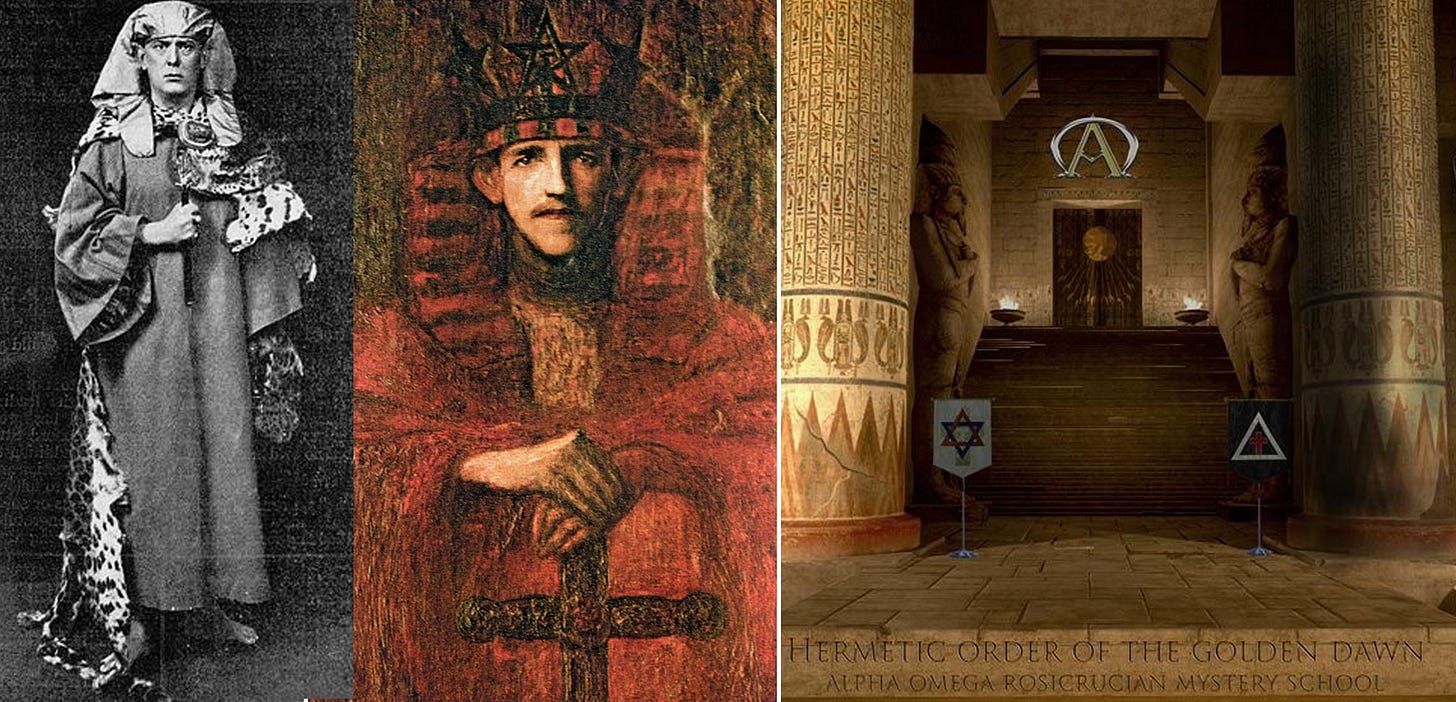
It is interesting to note that Aleister Crowley would write an article claiming that Helena Blavatsky was the Whitechapel killer saying: “It is hardly one’s first, or even one’s hundredth guess, that the Victorian worthy in the case of Jack the Ripper was no less a person than Helena Petrovna Blavatsky.”
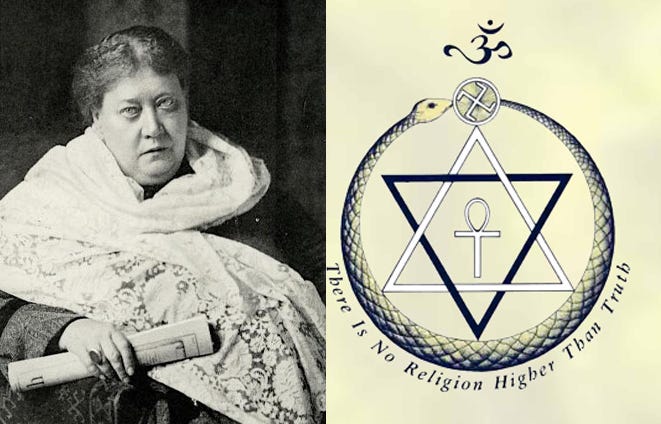
Describing the occult-cannibalistic underpinning of the mutilations, Crowley wrote: “The very least of the crimes necessary for him (or her) to commit to attain the power sought is actual murder, by which the human victim essential to the sacrifice is provided . . . Yet, though the price is awful, horrible, unutterable, the power is real.”
While it is extremely unlikely that Blavatsky, for all her faults, was directly involved in killing the women, the involvement attributed to her by Crowley is likely very real and while not holding the knife herself, Blavatsky’s engagement in practical magic through her esoteric section, and involvement with leading black magicians over the course of decades means that she likely did have some form of directing influence in the affair.
Whatever the details of Blavatsky’s role in the sordid affair, a few things are certain.
For one, they were certainly the workings of black magic which certain powerful forces within the British Empire took very seriously.
As stated above, whether or not there were multiple killers involved in this seven week ritual, the figure for whom the most evidence exists as a principal agent was the black magician Robert D’Onston Stephenson, disciple of Bulwer-Lytton, lover of Mabel Collins, and business partner of Baroness Vittoria Cremers.
Additionally, by 1910 Cremers became an intimate associate, and business manager of Aleister Crowley, serving as first secretary and treasurer of Crowley’s Mysteria Mystica Maxima order (aka: the British branch of the Ordo Templi Orientis). Crowley referred to Cremers in his satanic 1917 novel ‘Moonchild’ describing Cremers’ character with the following blood curdling description:
“Every thought in her mind was a curse against God, against man, against love, against beauty, against life itself. She was a combination of the with burner with the witch, an incarnation of the spirit of puritanism, from its sourness to its sexual degeneracy”.
The popular picture of the Collins-Cremers-D’Onston triangle as we have been able to gather from the surviving records (monopolized by Cremers and Crowley) remains suspicious and full of logical inconsistencies. The Cremers/Crowley accounts portray both women as mere innocent victims completely unaware of the dark arts or black magic, and yet both women were considered adept enough to be invited to join the inner sanctum of the Esoteric Section of the Theosophists alongside the most adept black magicians of the Hermetic Order of the Golden Dawn.
Although it is popularly believed that D’Onston had never met Blavatsky, their mutual involvement with Bulwer-Lytton (the father AND son), Giuseppe Mazzini and Giuseppe Garibaldi (founder/grandmaster of the Rite of Memphis and Misraim) occured during the exact same time frames and geographical locations.
Moreso, Blavatsky and D’Onston’s appearance in India in 1877 is likely not coincidental, nor are the mutual Rosicrucian networks to which each belonged.
D’Onston’s involvement with Blavatsky’s Lucifer Magazine after it was being edited by Annie Besant, and his continued relationship with W.T. Stead and his involvement with Sir Charles Warren with whom he corresponded on matters pertaining to Solomon’s temple are also completely ignored by researchers to this day.
So how do these anomalies connect with the Whitechapel murders of 1888?
The Probability of Multiple Rippers
One fact that has not been raised, is the likelihood that D’Onston didn’t act alone.
It has been established that forces representing the highest echelons of occultism were operating throughout Whitechapel during the murders, and were also in direct contact with D’Onston and leading Theosophists in India.
The organized nature of the murders is so specific that no room existed for error.
Since the murders had to happen at the specific locations that created the formation of the Vescia Pisces, it was impossible to simply hope that a prostitute might be standing outside in the middle of the night upon the killer’s arrival. It had to be arranged in advance.
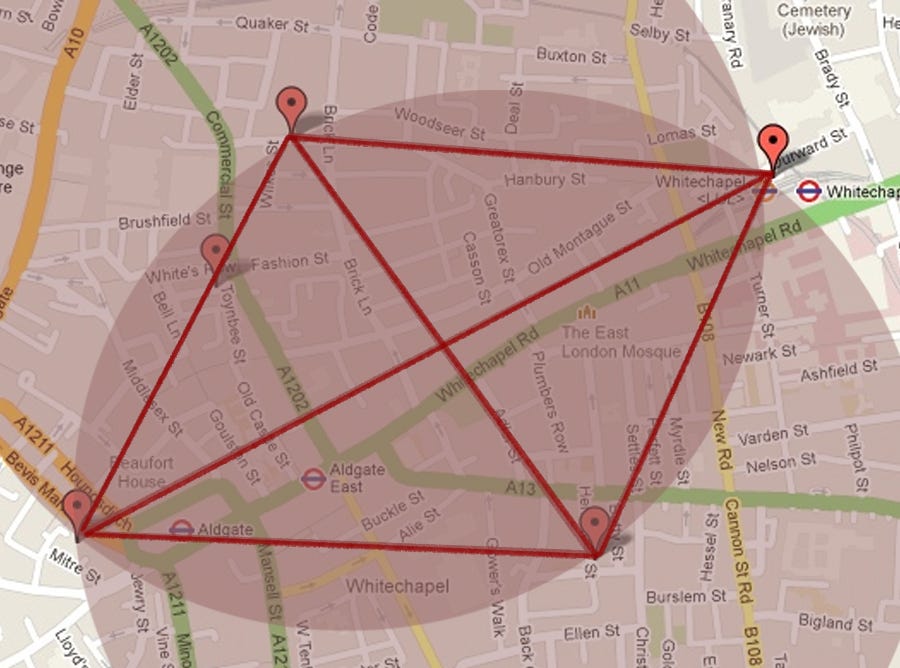
Beyond the slashing of the throats of the victims, and evidence of surgical experience and knowledge of anatomy on the part of the killer(s), very little consistency is found among the five primary Whitechapel victims.
Is it possible that multiple killers took their turns in the ritual?
Popular accounts tend to portray Mabel Collins and Cremers as completely innocent to the truth of D’Onston’s sick proclivities… but why do we assume that Cremers or Collins are here telling the truth?
In fact, as we will come to see in the next installment of our series, an extremely important, yet too-often overlooked component of oligarchical dark arts involves the intentional fragmenting of the personalities of higher initiates. Evidence of this ritual fragmentation can be seen in the psychological profiles of Mabel Collins, Vittoria Cremers, Robert D’Onston Stephenson and even Sir Arthur Conan Doyle.
This tendency to generate altered states among adepts of oligarchical “mystery” cults is something which very few have come close to analysing with any competency. Among the few who have, is none other than Edgar Allan Poe.
Footnotes
[1] Melvin Harris, The True Face of Jack the Ripper, G2 Books, UK, 2020, p. 126
[2] Harris, True Face Of Jack The Ripper, p. 49
[3] Today, 221 Baker Street stands as a Sherlock Holmes Museum
[4] W.T.Stead by E.T Cook, The Contemporary Review, June 1912, reprinted in Frederick Whyte, The Life of W.T. Stead, London, 1925, vol. 2, p.353-356
[5] Carroll Quigley, The Anglo-American Establishment, New York, Books in Focus, 1981 www.archive.org/details/TheAnglo-americanEstablishment p. 32
[6] William Wynn Westcott, Sepher Yetzirah or Book of Formation, p. 9
[7] In the USA, a Gnostic Branch of the American Theosophical Society was created by Dr. Elliott Coues centered in Washington D.C., and an Aryan Branch headed by William Quan Judge was headquartered in New York.
[8] “Thelema” is a satanic theology channeled to Crowley by a demon named Aiwass in 1904 built up around the deification of the individual, radical hedonism centered around the Hellfire Club doctrine of ‘Do What Thou Wilst Shall be the Whole of the Law’.
Also watch for free our RTF Docu-Series “Escaping Calypso’s Island: A Journey Out of Our Green Delusion” and our CP Docu-Series “The Hidden Hand Behind UFOs”.
The statements, views and opinions expressed in this column are solely those of the author and do not necessarily represent those of this site. This site does not give financial, investment or medical advice.

Yeah it`s Possible…Anybody can earn 500$+ daily… You can earn from 21000-23000 a month or even more if you work as a full time job…It’s easy, just follow instructions on this page, read it carefully from start to finish…LKMaqw It’s a flexible job but a good earning opportunity………..
.
Click and Earn Now→→→→ Www.Payathome9.Com