

 Grzegorz Ochman
The statements, views and opinions expressed in this column are solely those of the author and do not necessarily represent those of this site. This site does not give financial, investment or medical advice.
“The Yankee and Cowboy War,” by Carl Oglesby, part 1
Reading and comments by John OLoughlin
This is, at its core, the theme of the entire narrative that follows. The conflict between the Yankees and the Cowboys, the underlying “cause” of their divergence in the later Cold War period, stemmed from the increasing tension between the Yankees’ detentist strategy in the Atlantic and the Cowboys’ militarist approach in the Pacific. Maintaining both strategies simultaneously meant upholding two separate and opposed realities—two contradictory domains of world-historical truth.
In Europe and the industrial world, the clear truth was that we could coexist with communism. In Asia and the Third World, however, the evident truth was that we could not. We had to fight and win wars against communism, or else face dire consequences at home.
This book proposes to demonstrate that Dallas and Watergate are intrinsically linked conspiracies within a hidden drama of coup and countercoup. This represents the life of an inner oligarchic power sphere—an “invisible government”—capable of any act in pursuit of its objectives. This clandestine American state operates above the law and beyond moral constraints, potentially forming the foundations of an embryonic police state.
The Yankee/Cowboy split thus presents itself as a not-too-simplistic way to swiftly indicate the existence of a rich and complex rivalry, the general cultural dispositions of its key figures, and the blend of historical and mythic elements in their struggle—where John Wayne fantasies meet real bloodshed and genocide.
The essence of these archetypes is perhaps best illustrated in the persons and relationship of corporate banker/monopolist David Rockefeller and tycoon entrepreneur Howard Hughes. An inquiry into their long rivalry is the first step in our exploration of Watergate in Part Three. However, the spirit of “Yankeeness” extends far beyond Chase Manhattan, just as “Cowboyness” goes beyond the Hughes empire.
Yankeeness is embodied in the Ivy League, while Cowboyness finds expression in the NFL. Yankees frequent the exclusive clubs of Manhattan, Boston, and Georgetown, while Cowboys are members of the exclusive clubs in Dallas, New Orleans, and Orange County, both East and West. Yankee is the Council on Foreign Relations, the secret Round Table, Eleanor Roosevelt, Bundles for Britain, and, at a certain point, the Dulles brothers and the doctrine of massive retaliation. Cowboy is Lyndon Johnson, John Connally, Howard Hunt, and the Bay of Pigs team. Yankee is Kennedy; Cowboy is Nixon.
Quigley is the author of the extensive book Tragedy and Hope, which I will revisit in Chapter Two. My acknowledgment of Quigley begins here as I borrow the following observation from his summary. He notes that, since 1950, a “revolutionary change” has been occurring in American politics. This transformation involves “a disintegration of the middle class and a corresponding increase in significance of the petty bourgeoisie, at the same time that the economic influence of the older Wall Street financial groups has been weakening and challenged by new wealth springing up outside the eastern cities, notably in the Southwest and Far West.” He continues:
Yankees and Cowboys
These new sources of wealth have been largely based on government action and spending but have nonetheless adopted a petty-bourgeois outlook rather than the semi-aristocratic view that pervades the Eastern Establishment. This new wealth, stemming from petroleum, natural gas, ruthless exploitation of national resources, the aviation industry, military bases in the South and West, and, finally, the space industry with all its attendant activities, has centered in Texas and Southern California. For the first time, its existence made it possible for the petty-bourgeois outlook to make its mark in the political nomination process, rather than merely influencing politics by voting for a Republican candidate selected under Eastern Establishment influence. By the 1964 election, the major political issue in the country became the financial struggle behind the scenes between the old wealth—civilized and cultured in its foundations—and the new wealth, virile and uninformed, arising from the profits of government-dependent corporations in the Southwest and West.
The point of introducing the Cowboy/Yankee language is to bring into focus this old money/new money, Atlanticist/Frontierist tension as it plays out in current events.
The main idea of looking at things this way is to see that a sectional rivalry, derived from the patterns of the Civil War, still operates in American politics. At the altitude of national power elites, this may be the most sensitive and inflamed division of all, more concentrated than race or class, and more fundamental than party ideologies. The argument is that the emerging clash of Yankee and Cowboy wills beneath the visible stream of events is the dominant fact of U.S. political life since 1960. The dissolution of the Yankee/Cowboy consensus, which existed from World War II and the Cold War until 1960, is behind both the assassination of Kennedy in Dallas and the Watergate scandal of Nixon.
Let’s go a step further with these types—Cowboy and Yankee—and sketch a first outline of their differing worldviews.
The Yankee mindset, global in scope, is at home in the broader world, accustomed to viewing it as an integrated whole, shaped by Western exploration, conquest, and commerce. The Yankee believes that the basis of a good world order is the health of America’s alliances across the North Atlantic—relationships with Western democracies from which our tradition mainly flows. He believes the United States continues the culture of Europe, relating to the Atlantic as though it were a lake, whose opposite shore must be secured as a matter of domestic priority. To the Yankee, Europe is the key world theater, and it is self-evident that the fate of the United States is inevitably linked to Europe’s in a shared destiny of white cultural supremacy, transcending national boundaries—a unified world civilization.
In contrast, the Cowboy mindset does not assume that American and European cultures are continuous. Instead, the Cowboy emphasizes the discontinuity of the New World from the Old. He substitutes the Yankee’s Atlantic-oriented culture for one centered on an expanding wilderness frontier and an advanced Pacific strategy.
The Yankee monopolists who first doubted military victory in Vietnam did so because they foresaw the high probability of failure and the ambiguous nature of success. The Cowboy entrepreneurs who fought hardest to sustain that faith did so out of a conviction that success was necessary. As one multicorporate-liberal Yankee remarked around 1968: “The United States cannot wage a successful non-nuclear land campaign in Asia. It will destroy its much more essential relations in Europe if, against all wisdom, its leadership continues to siphon off precious national blood and treasure to win this war. It is necessary to stand down.” The Cowboy countered: “Only the strong are free.”
The distinction between the East Coast monopolist and the Western tycoon entrepreneur is the primary class-economic divide identified by the Yankee/Cowboy perspective. It arises because one naturally looks for a class-economic basis for the apparent conflict at the summit of American power. Antiwar sentiment, for example, struck the Eastern Establishment soon after it had struck students, teachers, and clergy—particularly large, bank-connected firms tied to the trans-Atlantic business grid. Meanwhile, industrial sectors around the military-industrial complex, agribusiness, the Southern boom of the 60s and 70s, and independent Texas/Southwest oil interests—the forces Quigley calls “new wealth”—grew momentarily war-weary, supporting figures like Texan Lyndon Johnson and Southern Californian Richard Nixon until they exhausted their military options.
Why did this divide emerge? After a century of Northeastern leadership and 25 years of Cold War unity, why did the national ruling coalition of the old and new owning classes—Yankee and Cowboy—begin pulling apart? To understand, we must revisit the basis of their initial unity.
Historian William Appleman Williams offers insight into this question, arguing that the coalition between the forces of capitalism (or “plutocracy”) and democracy in American politics stemmed from the ever-expanding wilderness frontier. The frontier was a reprieve for democracy and capitalism, providing vast stretches of natural resources, untouched by capitalist production, to finance internal conflicts.
The disappearance of the frontier marked the fading of the tycoon-entrepreneur as a political force in national life. The Hughes empire, once a symbol of Cowboy power, was corporatized. Old man Hunt had passed, leaving his sons to impose Harvard Business School bureaucracy on the family empire. Yet, curiously, the political power of the Cowboy tycoon persisted into Nixon’s second presidential victory, long after the era of individualistic entrepreneurship should have ended.
As the frontier closed, the dynamics of American political life changed. The Cowboy ethos of expansion reached its limits, clashing with the rising reality of a globalized, bounded world. Americans no longer faced a “Wild West” in Asia but rather a mature, self-modernizing China, Korea, and Vietnam. The Frontier mentality that drove U.S. expansion now encountered modern, technologically proficient nations. This transformation from an unbounded to a bounded state will continue to stir internal unrest, posing a challenge to traditional American values and institutions.
I have not written this book to suggest choosing sides between Cowboy and Yankee in a second Civil War. My belief is that ordinary people across the country—Northeast to Southwest—must oppose all such power intrigues. However, to do so, we must recognize the forces at play. Understanding the assassination of President Kennedy, like Lincoln’s, is essential to comprehending the fundamental events shaping American governance.
Ultimately, the American generations living with the reality of a closed frontier must now decide how to form a new national identity, one that does not rely on constant expansion.
This version has been formatted for clarity, with corrections for punctuation, grammar, and flow. Let me know if you’d like further adjustments!
This book is excellent for understanding the world. To this day, you can still observe the Yankee/Cowboy split. You could say Democrats and figures like Klaus Schwab, Bill Gates, and other “old wealth” types represent the Yankees. These individuals seek to control the world through international organizations like the IMF, World Bank, WHO, etc. They attempt to exert influence through mechanisms such as debt, COVID policies, the green agenda, and so on.
On the other side, you have Republicans and people like Elon Musk and Peter Thiel. I’ve written about both before. They co-founded PayPal with help from the CIA and the U.S. government. After that, Elon created Tesla, which only survives due to government subsidies for electric cars, and then SpaceX, which exists thanks to NASA and Pentagon contracts. On the other hand, Peter Thiel’s Palantir was created and sustained through NSA and CIA contracts.
As I previously wrote:
“Palantir, the software company literally named after an evil orb used by dark forces to spy on people. It shouldn’t surprise you that Palantir, founded by the notorious Silicon Valley billionaire Peter Thiel, worked with the NSA to create the most comprehensive digital espionage apparatus ever conceived. Palantir was co-created with American spies; one of its earliest investors was the CIA, and the company will not disclose any of its contracts with the government despite making over a billion dollars from these clandestine partnerships.”
This aligns perfectly with what Carl Oglesby wrote:
“These new sources of wealth (the Cowboys) have been largely based on government action and spending.”
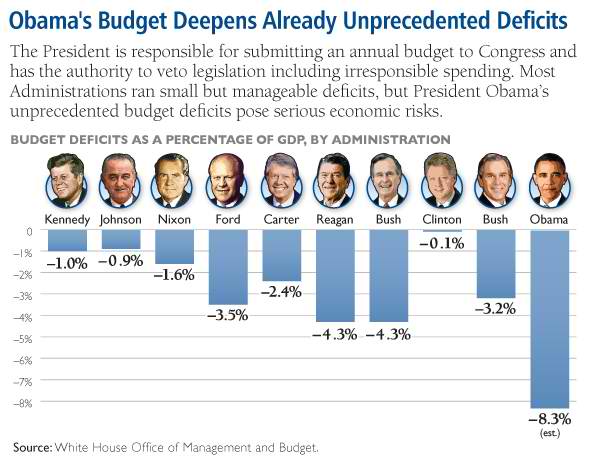
It’s ironic how Republicans often claim to be the most fiscally responsible party, yet, as Michael Parenti pointed out, Republican presidents are the ones accumulating the largest debts. The only president who didn’t run a deficit was Bill Clinton. We can even discount Obama because much of his spending was a result of Bush’s actions. So, while Republicans preach fiscal responsibility, they’re often the ones benefiting from government spending and increasing the deficit.
The statements, views and opinions expressed in this column are solely those of the author and do not necessarily represent those of this site. This site does not give financial, investment or medical advice.


It’s going to collapse. The lasting consequences will ensure these factions and their leaders will never again garner the power and support they have. The debt is astronomic and the crimes are diabolical beyond belief. When the dust settles the truth will be known and their many wicked plans laid bare for all to see. This octopus of evil is massive and ancient, encompassing essentially the entire system from top to bottom. My son has to get his fingerprint scanned to get his school meal, while welfare elites instigate unaccountable and thoroughly illegal tyrannies with every breath and penstroke. I’ll… Read more »
I have not written this book to suggest choosing sides between Cowboy and Yankee in a second Civil War. My belief is that ordinary people across the country—Northeast to Southwest—must oppose all such power intrigues. However, to do so, we must recognize the forces at play. Understanding the assassination of President Kennedy, like Lincoln’s, is essential to comprehending the fundamental events shaping American governance.
What kind of group do you suggest we build to replace the ones that must be opposed and eliminated?
If you’d like any assistance in producing a solutions-based book in future I give the Duran permission to tell you my email. You clearly know the players, and the main issue being how to raise awareness of and organise an effective opposition.
Whatever these groups purport to represent, it doesnt marry up with their actions.
Yeah it`s Possible…Anybody can earn 500$+ daily… You can earn from 21000-23000 a month or even more if you work as a full time job…It’s easy, just follow instructions on this page, read it carefully from start to finish…LKMaqw It’s a flexible job but a good earning opportunity………..
.
Click and Earn Now→→→→ Www.Payathome9.Com
“Start a website that charges information about how to start a website that charges information. Post Comment for Link to site.”
“If you want to change the world, go home and love your family.”
-Mother Theresa
Start by taking your kids out of the public school indoctrination system.
Put your money where your mouth is!
Not sure why the connection between JFK and Nixon would be regarded as astonishing. It’s obviously the same players. They would like to have assassinated Nixon also but too many assassinations per year might wake up too many insouciant Americans, so they just pushed him aside instead. Paul Craig Roberts (now) and William Pierce (earlier) knows / knew all about these things. But if you leave out the Khazar immigration invasion of America in the 1880s followed by the Khazar takeover of America (Federal Reserve, Balfour Declaration, WWI, WWII, Israel, etc culminating in AIPAC which dictates policy to the puppets… Read more »