

 Grzegorz Ochman
The statements, views and opinions expressed in this column are solely those of the author and do not necessarily represent those of this site. This site does not give financial, investment or medical advice.
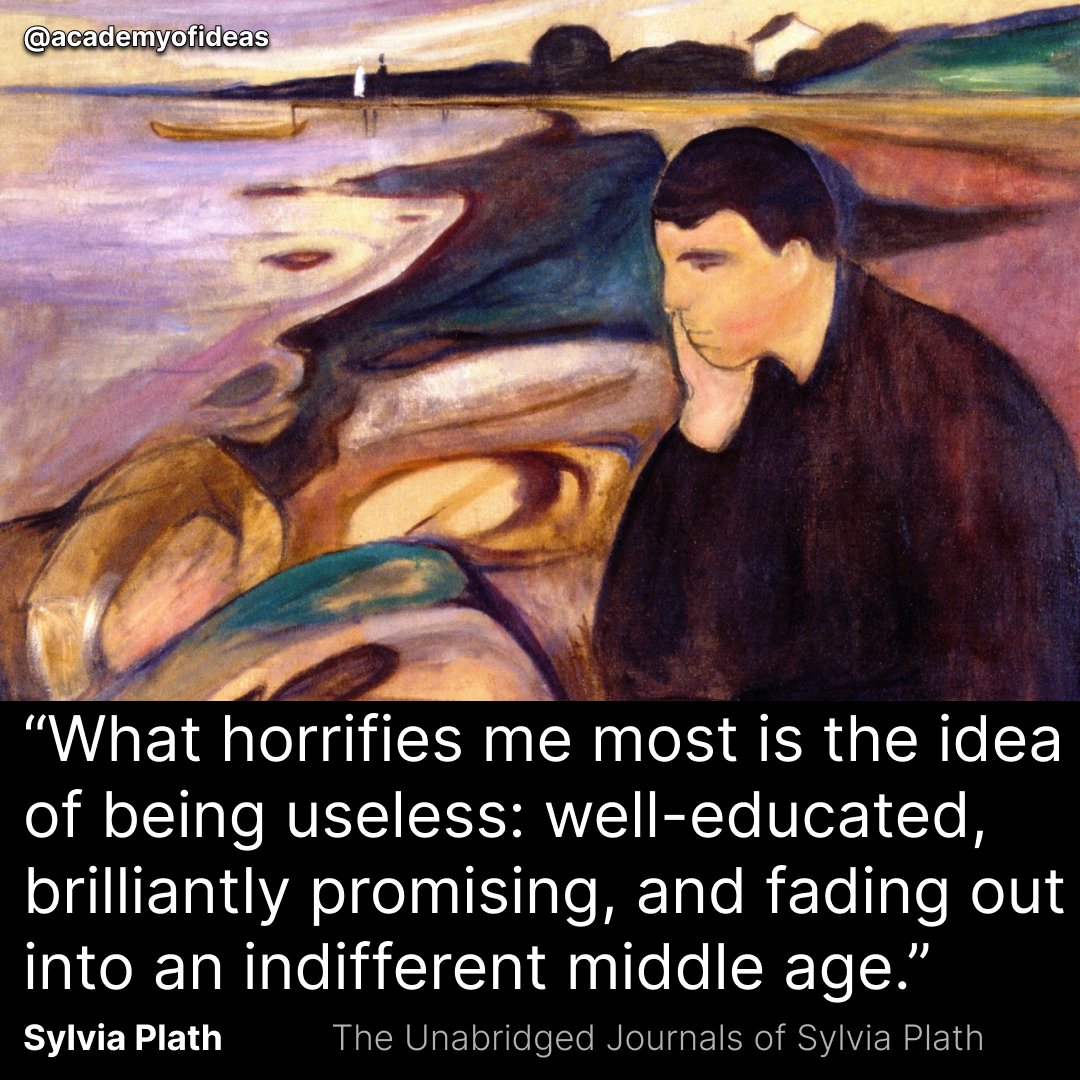
According to Becker we cannot face up to the reality of our death without experiencing debilitating anxiety and so we attempt to quell this anxiety by “denying death”. Denial of death is achieved by what Becker called striving for the heroic, or in other words attaching ourselves to a purpose, cause, or creation which we believe will outlive our physical existence, thus granting us a form of immortality. There are two main paths to heroism, the path of the nonconformist, or what Becker calls cosmic or personal heroism, and the path of the conformist, which he calls cultural heroism.
The path of the nonconformist consists of cultivating one’s unique potential and using one’s talents and skills in the creation of something novel and meaningful.
“What is one’s true talent, his secret gift, his authentic vocation?” writes Becker “In what way is one truly unique, and how can he express this uniqueness, give it form, dedicate it to something beyond himself?” (Ernest Becker, The Denial of Death)
In creating something which will in a sense live on past one’s physical existence and which is the expression of one’s uniqueness, be it a work of art, a scientific discovery, or an entrepreneurial endeavor, one’s life, according to Becker, will be characterized by a form of personal heroism. This personal heroism helps one deny death in a manner conducive to psychological health and vitality.
However, by the time most of us reach adulthood we have been inculcated to view our uniqueness not as something to be cultivated, but as something to be shunned. Very few people view themselves as capable of bringing forth anything of significance into the world and so are incapable of engaging in personal heroism. For such people, an alternative route to the denial of death is required, or else they run the risk of being overwhelmed by anxiety and nihilistic despair. This alternative is found through conformity and the adoption of pre-determined social roles, or what Becker calls cultural heroism. While this path limits the expression of one’s uniqueness and leads to a life dominated by repetition and routine, it provides people with security and comfort, and makes them feel as if they are participating in something significant. Or as Becker explains:
“Like many prisoners they are comfortable in their limited and protected routines, and the idea of a parole into the wide world of chance, accident, and choice terrifies them. In the prison of one’s character one can pretend and feel that he is somebody, that the world is manageable, that there is a reason for one’s life, a ready justification for one’s action. To live automatically and uncritically is to be assured of at least a minimum share of the programmed cultural heroics . . .” (Ernest Becker, The Denial of Death)
Becker makes the interesting claim that cultural heroism is effective due to the religious function that modern secular societies play in the conformist’s life. In other words, just as Christianity in the Middle Ages provided those in the West with a meaning to their existence and a set of values by which to shape their lives, in our more secular world one’s society now plays such a role. As Becker explains:
“Society itself is a codified hero system, which means that society everywhere is a living myth of the significance of human life, a defiant creation of meaning. Every society thus is a “religion” whether it thinks so or not: Soviet “religion” and Maoist “religion” are as truly religious as are scientific and consumer “religion,” no matter how much they may try to disguise themselves by omitting religious and spiritual ideas from their lives.” (Ernest Becker, The Denial of Death)
Just like any religion, the religion of one’s society becomes easier to believe in, the greater the number of people to whom worship it. And this is why the nonconformists are so feared by the masses, the unique individuals plant seeds of doubt into the minds of the conformists regarding the significance of their social roles, and thus the significance of their very existence. Therefore, the masses actively discourage the cultivation of one’s uniqueness, ridicule and ostracize nonconformists, and try and pressure them back to conformity – something they must do given that their existential significance is on the line.
While there exist great pressures to conform, of the two paths to heroism, the one less traveled, or the cultivation and expression of one’s uniqueness, has long been seen as the superior of the two, for as Emerson wrote:
“Whence is your power? From my nonconformity. I never listened to your people’s law, or to what they call their gospel, and wasted my time.” (Ralph Waldo Emerson)
The conformists’ existence, while comfortable, is largely a robotic state. Such people are always looking to others in order to determine how to behave and what to believe. Thus in effect, conformity amounts to living one’s life for others – not for oneself – and as Virginia Woolf recognized:
“Once conform, once do what other people do because they do it, and a lethargy steals over all the finer nerves and faculties of the soul. [One] becomes all outer show and inward emptiness; dull, callous, and indifferent.” (Virginia Woolf)
This stultifying effect of conformity led Kierkegaard to stress the importance of striving to follow a life path which is personally chosen – as a conformist’s existence can barely be called living at all. In his work Concluding Unscientific Postscript to Philosophical Fragments he suggests that cultivating one’s uniqueness is like “riding a wild stallion”, while conforming is like “falling asleep on a moving hay wagon”. But like Becker, Kierkegaard realized that few people are capable of cultivating their uniqueness, for as he wrote:
“Surrounded by hordes of people, busy with all sorts of secular matters, more and more shrewd about the ways of the world – such a person forgets himself, forgets his name divinely understood, does not dare to believe in himself, finds it too risky to be himself, far easier and safer to be like the others, to become a copy, a number, part of the crowd.” (Soren Kierkegaard, The Sickness Unto Death)
But while most people conform almost without reflecting on why they do so, others have a nagging feeling that there is more to life than the social role they have adopted. They sense that in the short time they have between two eternal darknesses they should strive to cultivate their uniqueness and to see what they are personally capable of. But even with this awareness why are so few people capable of breaking the powerful chains of conformity?
In other words, While Becker may be correct that our fear of death impels us to strive for the heroic, why is it that so many people choose the path of conformity instead of the far superior path of the nonconformist to achieve the denial of death? While numerous thinkers have attempted to pinpoint what makes it so difficult to be a nonconformist, Nietzsche, in his book Untimely Meditations, suggested that the rarity of the nonconformist can be explained by a specific character flaw which afflicts the vast majority of us:
“A traveler who had seen many countries, peoples and several of the earth’s continents was asked what attribute he had found in men everywhere. He said: “They have a propensity for laziness.” To others, it seems that he should have said: “They are all fearful. They hide themselves behind customs and opinions.” In his heart every man knows quite well that, being unique, he will be in the world only once and that there will be no second chance for his oneness to coalesce from the strangely variegated assortment that he is: he knows it but hides it like a bad conscience – why? From fear of his neighbor, who demands conformity and cloaks himself with it. But what is it that forces the individual to fear his neighbor, to think and act like a member of a herd, and to have no joy in himself? Modesty, perhaps, in a few rare cases. For the majority it is idleness, inertia, in short that propensity for laziness of which the traveler spoke. He is right: men are even lazier than they are fearful.” (Nietzsche, Untimely Meditations III)
Website: academyofideas
“The fact that there was no answer to the question he screamed, “Why do I suffer(die / exist)?” Man, the bravest animal and most prone to suffer(because he found out about his mortality), does not deny suffering(existence / death) as such: he wills it, he even seeks it out, provided he is shown a meaning for it, a purpose of suffering(existence / death). The meaninglessness of suffering(existence / death), not the suffering(existence / death), was the curse that lay over mankind so far.”
-Nietzsche, Genealogy of Morals, III, §28
“Whatever happened? A breach in the very unity of life, a biological paradox, an abomination, an absurdity, an exaggeration of disastrous nature. Life had overshot its target, blowing itself apart. A species had been armed too heavily – by spirit made almighty without(thinking without knowing why we think / suffer / exist), but equally a menace to its own well-being… (because of existential pain caused by need for answer / meaning)
So there he stands with his visions(knowledge of its existence / humanity / morality), betrayed by the universe(without knowing why he exists / suffers / has to die), in wonder and fear(full of curiosity and pain of not knowing the answer). The beast knew fear as well, in thunderstorms and on the lion’s claw. But man became fearful of life itself – indeed, of his very being(his on existence)”
-Zapffe
“For too long we have been dreaming a dream from which we are now waking up: the dream that if we just improve the socioeconomic situation of people, everything will be okay, people will become happy. The truth is that as the struggle for survival has subsided, the question has emerged: survival for what? Ever more people today have the means to live, but no meaning to live for.” -Viktor Frankl
“In some ways suffering(existential pain caused by the need to answer Why / Why do I suffer / Why do I exist?) ceases to be suffering at the moment it finds a meaning(answer), such as the meaning of a sacrifice.”
-Viktor Frankl, Man’s Search for Meaning
Aesthetics
In Schopenhauer’s aesthetics, there is a subjective and objective experience.
The subjective experience of aesthetics is the will-less perception of the world, we free ourselves temporarily from the individual will. Schopenhauer writes:
“It is the painless state which Epicurus prized as the highest good and as the state of the gods; for we are for the moment set free from the miserable striving of the will; we keep the Sabbath of the penal servitude of willing; the wheel of Ixion stands still.”
Arthur Schopenhauer, The World as Will and Representation
On the other hand, the objective side of aesthetic experience is to communicate Platonic ideas, which represent the quintessential forms of perfection and beauty. They reveal some essential or universal quality of man and the world. These are experienced when our attention is focused entirely on the phenomena. The Ideas are “abstract objects” that are not part of our creation, and are beyond space, time and causality.
Arts such as sculpture, painting, poetry, and theatre, alleviate the suffering and ills of life by showing us the eternal and universal behind the transitory and the individual, allowing us to participate in eternity. We transport our gaze away from the particular objects of desire of the individual and feel ourselves as part of something universal. Art allows us to forget ourselves, and become will-less. Our modern forms of art such as movies and video games also help us transcend our default state.
The most powerful experience of art is the feeling of the sublime. For Schopenhauer, this is present in works of art that overwhelms us or reduces our existence on this planet to a mere speck, they stand in a hostile relationship with the human world in general. However, one may consciously tear away from one’s world, and with both a loss of our self and a liberation from the will, we experience a “state of elevation”, this is the feeling of the sublime, which is present above all in tragic drama.
For Schopenhauer, the power of the arts to elevate us above the strife of wills is possessed above all by music, which is in an entirely different realm than all other arts. It affords a profound pleasure with which we see the deepest recesses of our nature find expression, calming our inner tornado. He would undoubtedly agree with Nietzsche’s quote that, “without music life would be a mistake.”
“Music is as direct an objectification and copy of the whole will as the world itself, nay, even as the Ideas, whose multiplied manifestation constitutes the world of individual things. Music is thus by no means like the other arts, the copy of the Ideas, but the copy of the will itself, whose objectivity the Ideas are. This is why the effect of music is so much more powerful and penetrating than that of the other arts, for they speak only of shadows, but it speaks of the thing itself.” – Arthur Schopenhauer, The World as Will and Representation
Ethics
The non-egoistic attitude one obtains from aesthetics, finally leads to Schopenhauer’s ethics. His ethics derives from the awareness of the suffering of another person’s aimless striving of the will. Our ultimate oneness with each other is the basis of morality, compassion and empathy. Harming others is to harm oneself, and one must treat others as kindly as one treats oneself, with the aim to reduce suffering in the world.
In this kind of selfless love, one feels the life of another person in an almost magical way. In this intimate experience of the suffering of others, we connect with ourselves, with others and with nature in the deepest possible way, leading to a great serenity.
Website: eternalisedofficial
“Everything can be taken from a man but one thing: the last of the human freedoms—to choose one’s attitude in any given set of circumstances, to choose one’s own way.”
― Viktor E. Frankl, Man’s Search for Meaning
“Don’t aim at success. The more you aim at it and make it a target, the more you are going to miss it. For success, like happiness, cannot be pursued; it must ensue, and it only does so as the unintended side effect of one’s personal dedication to a cause greater than oneself or as the by-product of one’s surrender to a person other than oneself. Happiness must happen, and the same holds for success: you have to let it happen by not caring about it. I want you to listen to what your conscience commands you to do and go on to carry it out to the best of your knowledge. Then you will live to see that in the long-run—in the long-run, I say!—success will follow you precisely because you had forgotten to think about it”
― Viktor E. Frankl, Man’s Search for Meaning
“Ultimately, man should not ask what the meaning of his life is, but rather must recognize that it is he who is asked. In a word, each man is questioned by life; and he can only answer to life by answering for his own life; to life he can only respond by being responsible.”
― Viktor E. Frankl, Man’s Search for Meaning
“So live as if you were living already for the second time and as if you had acted the first time as wrongly as you are about to act now!”
― Viktor E. Frankl, Man’s Search for Meaning
“No one can build you the bridge on which you, and only you, must cross the river of life. There may be countless trails and bridges and demigods who would gladly carry you across; but only at the price of pawning and forgoing yourself. There is one path in the world that none can walk but you. Where does it lead? Don’t ask, walk!” – Friedrich Nietzsche, Schopenhauer as Educator
Where does it lead? to the truth. What is the truth? Don’t ask, find out for yourself!
“But there was no need to be ashamed of tears, for tears bore witness that a man had the greatest of courage, the courage to suffer.”
― Viktor E. Frankl, Man’s Search for Meaning
The statements, views and opinions expressed in this column are solely those of the author and do not necessarily represent those of this site. This site does not give financial, investment or medical advice.


You are here to gather experiences using a physical body. Your higher self is immortal and uses bodies for that purpose. Your incarnation is not here ‘to survive’, per se. For more info, check out Matrix V, Quest of the Spirit, the Ultimate Frontier.
Here’s a first step for nonconformists. Refuse to fight in stupid wars cooked up by stupid oligarchs and stupid politicians. Everyone needs to become a “conscientious objector”. Stop being a sucker for the “Elites”
The Ukrainian Soldiers are throwing away their lives for nothing. Their enemy is in Kiev, not Moscow.
I want to write about Nietzsche’s concept of the Übermensch and how it was later used to control people. Here’s a brief overview of what I’d like to discuss: Consider two states at war that now think in terms of Übermensch and Untermensch. Some Zionists in Israel, for instance, view Arabs as Untermensch—subhuman—and feel that these “subhumans” need to be eradicated. Similarly, I want to point out that Ukraine is not much different in this respect. Have you heard what they call Russians? To many Ukrainians, Russians are referred to as “Orcs,” a term implying that they are Untermensch or subhuman. So, both of these states at war—whom… Read more »
Existence is it’s own meaning. We’re not here for nothing. And we could all benefit from being more at peace with ourselves about the situation instead of making life a living hell for each other.