

 Grzegorz Ochman
The statements, views and opinions expressed in this column are solely those of the author and do not necessarily represent those of this site. This site does not give financial, investment or medical advice.
Whitney Webb is the person whose views align most closely with mine because she is the only one who sees their hidden collaboration.
“An exercise hosted by the World Economic Forum in coordination with Russia’s state-owned bank, Sberbank, one of the largest financial institutions in Russia, and with the participation of the Russian Prime Minister.”
I also wanted to point out the Covid response in Russia and China. While they used their own vaccines, both states implemented the same policies as the West regarding Covid. I previously wrote: if there is supposedly a fight against them and fundamental differences between them, where the hell were those differences during Covid?
“I also find it quite astounding when you consider that the entities involved in Cyber Polygon—the U.S. Department of Justice, the FBI, and the Secret Service—are all part of the initiative, yet at the same time, it’s being co-hosted by a Russian government state-owned entity.”
Where the hell are those differences between them and this so-called global multipolarity and conflict, if Klaus Schwab’s World Economic Forum is hosting their event in Russia? It’s the same as with Covid, which was orchestrated by Klaus Schwab and the World Economic Forum. So, where were those supposed differences during Covid?
“At the end of the day, many of these countries seem more interested in controlling their domestic populations than anything else, and they appear to be working toward that goal. If achieving it requires collaboration behind the scenes, that’s exactly what they’re willing to do.”
This is exactly what I’ve said before, using the example of Coca-Cola and Pepsi. While Coca-Cola and Pepsi compete for market share, they also work together to expand the overall market. In the same way, the West and BRICS compete for global control, but they collaborate behind the scenes to increase overall control.
This is similar to how people believed the Western powers thought Ukraine was winning the war. I consistently argued that they knew the truth. For heaven’s sake, if someone like me understands these dynamics, do you seriously think the FBI, CIA, and NSA don’t?
I’ve repeated this quote many times:
“We saw Hillary Clinton get up before a congressional committee and say the U.S. is losing the information war. I didn’t know it was a war. I thought information was something to enlighten people, not to capture them, envelop them, and indoctrinate them with. She started talking about Russia Today, France 24, Al Jazeera, and then she said, almost shrilly, ‘China is building a global news network in English!’ I thought that would be interesting. We’ll get another perspective, coverage of stories that weren’t covered before, and another viewpoint to compare with the ones we’ve been fed from the beginning. But she sees it as a threat.
That’s what the Empire is about: controlling people everywhere, at home and abroad, giving them as little as possible so that the few at the top get as rich as possible. The hungrier and poorer you are, the harder you’ll work for less and less.
That’s what the world is all about, unfortunately.
For you to think our leaders are stupid, or that the people who own this world and have built hundreds of military bases are stupid, is to be a bit stupid yourself. If you think your leader is stupid because he mispronounces words, you’re being stupid. If you think your leader is enlightened and intelligent, and has your interests at heart because he speaks smoothly and articulately, you’re being stupid also.” – Michael Parenti
This is how they hide their real intentions under a fake image of incompetence and stupidity. After all, they can’t openly say they want to create ISIS, an Islamic state where people are beheaded, or that they want to turn Libya into a country with slave markets. To achieve such goals, they need to convince people they wanted to do good but simply failed.
1:18
“But think about this because the question always is: who is Amazon? The first time Amazon ever made a profit was when they secured their $600 billion-plus contract from the CIA, and they now run the cloud services for the 17 intelligence agencies. With that contract, Bezos turned around and bought The Washington Post because of the fantastic increase in the company’s stock value. Now, the question is whether they will also get part of the JEDI contract for the DoD cloud. So, when you talk about Amazon entering your dreams, is it really Amazon—or is it the CIA?”
I know about the PayPal mafia, so I’m aware that Google, Twitter, LinkedIn, YouTube, etc., were all created with the support of the CIA. I didn’t know that about Amazon. The funniest thing for me is the fact that Elon Musk is supposedly responsible for reducing government spending, while all these businesses exist only because of government spending and support. Tesla could only exist because of the government’s green agenda, and the same goes for his solar business. SpaceX is only able to exist because of NASA and Pentagon contracts. So, the person who officially became the richest in the world because of government spending is now supposed to be responsible for reducing government spending. LOL.
4:38
“It’s not being talked about, which is really unfortunate, but what I find so insane about Welcome Leap is the hubris of the program. They are openly discussing doing this to children—developing an AI model of the “perfect” child’s brain and then, within 10 years, aiming to have 80% of children’s brains essentially pruned or manipulated to fit that model. This has huge implications for future generations and the future of human creativity and imagination. It’s essentially a way to homogenize human intellect, particularly in our youngest members.
What’s astonishing is that they are willing to put this out publicly and admit it on paper. This seems like something that would normally be a black-budget intelligence program, yet they are doing it openly. To me, this suggests they have become emboldened by recent events, particularly over the past year and a half, such as the COVID-19 vaccination trials conducted on infants and young children. Since parents are offering their kids for those trials, they may assume parents will do the same for this. It’s very egregious when you take the time to seriously think through the implications and read the program description.”
6:26
“Americans often think there are 24 different government agencies in the U.S. federal government, but in reality, there is one database. All the data ends up being consolidated into a small number of centralized database operations.
So, tell us about Cyber Polygon—what was that about? Cyber Polygon is the second exercise hosted by the World Economic Forum in coordination with Russia’s state-owned bank, Sberbank, one of the largest financial institutions in Russia, and with the participation of the Russian Prime Minister. This year’s theme differed slightly from last year’s, as it focused more on simulating a supply chain attack. We’ve seen many of those in the news, such as the SolarWinds hack and, more recently, a hack involving the company Kaseya, which was similar in scope to the SolarWinds incident. That was the specific scenario they were simulating.
Cyber Polygon has two parts: a technical training simulation and expert panels featuring international experts. Most of these experts are part of something called the World Economic Forum’s Partnership Against Cybercrime, which we can discuss further. The central themes revolve around creating new global digital ecosystems that are heavily centralized and ending online anonymity, particularly financial anonymity, as a way to combat cybercrime and ransomware.
Essentially, they are laying out a road map for controlling the digital world at a time when they openly admit that COVID-19 has forced much of society into the digital sphere. They are using this situation as an opportunity to gain more control than ever before. In this case, “they” refers to globalist organizations, the World Economic Forum, and public-private partnerships. This is what Cyber Polygon is simulating and discussing. Many of the solutions being presented will likely be offered in response to the next major cyberattack, one that could take down significant parts of the internet, disrupt countless lives, and lead to public demands for solutions—similar to how 9/11 created a demand for increased security and the introduction of a Homeland Security apparatus that had already been in development months earlier. Before 9/11, people questioned the need for such an agency, but afterward, it was widely accepted as necessary to combat terrorism.
If a “cyber pandemic,” as Klaus Schwab has predicted, does occur, it could lead to public demands for permanent solutions to ransomware and other cyber threats. This fits into a long-standing agenda, particularly in the U.S., EU, and UK, of introducing government-issued IDs for internet access—essentially a “driver’s license” for the internet, as it was once called under the Obama administration. That’s where this appears to be headed. There’s also a significant focus on financial transactions, which explains the emphasis on ransomware in these discussions. The ultimate goal is to create a system that allows the tracking of people’s financial activities.”
10:11
“Yeah, I think that’s fair to say. I also find it quite astounding when you consider that the entities involved in Cyber Polygon—the U.S. Department of Justice, the FBI, and the Secret Service—are all part of the initiative, yet at the same time, it’s being co-hosted by a Russian government state-owned entity. Despite all the rhetoric about Russian hackers and the need to implement policies in the U.S. to control online activity because of the “Russian threat,” they seem perfectly fine participating in this simulation with the Russian government.
If Russian hackers were genuinely the primary concern, you would expect them to raise questions about the risks of Russia gathering intelligence on how the U.S. would respond to cyberattacks. Yet, none of those concerns are raised. This, in my opinion, indicates that many of these entities are willing to collaborate behind the scenes to build out this digital panopticon infrastructure. They continue using familiar narratives of nation-state conflicts—stories that have been employed for decades—as a justification for implementing these measures in their respective countries.
At the end of the day, many of these countries seem more interested in controlling their domestic populations than anything else, and they appear to be working toward that goal. If achieving it requires collaboration behind the scenes, that’s exactly what they’re willing to do.”
12:47
“I think that’s very true. The involvement of figures like Larry Summers and his associates in shaping Russia’s economy after the collapse of the Soviet Union demonstrates significant external influence. There were considerable efforts by this group to set up Russia’s post-Soviet economic structure. Additionally, there are numerous connections between Russian oligarchs and Israel, a close U.S. ally that collaborates extensively with the U.S. financial system. There is a great deal of interconnectedness behind the scenes that doesn’t get much attention.
A lot of effort seems to be directed at keeping the public focused on a superficial narrative about power struggles—Russia and China versus the U.S. and the West—to prevent people from understanding what’s really happening behind the scenes. However, when you examine groups like the World Economic Forum and similar organizations, you see that all these players are meeting and collaborating in a seemingly harmonious way.”
23:32
“This year, we’ve seen the issue of climate change resurface prominently. In early January, Klaus Schwab essentially announced, ahead of the virtual Davos Conference, that fear and concern over COVID-19 would give way to climate change by the end of 2021. He suggested that the same kind of global fear that enveloped the world during most of 2020 would be generated around climate change. It seems clear that this fear and crisis, however it manifests—and which these figures apparently have advanced knowledge of—will be used for a specific purpose. It appears to be aimed at creating a new financial system.
Shortly after Klaus Schwab’s comments, Larry Fink of BlackRock made some interesting statements in his annual letter, which was reported on by The New York Times. The article describes Fink’s stance, noting that he is “pushing out the goalposts on climate action,” asking companies to “disclose a plan for how their business model will be compatible with a net-zero economy.” With nearly $9 trillion in investments, BlackRock wields significant influence. Last year, the firm voted against 69 companies and 64 directors for climate-related reasons, and it placed 191 companies on watch.
Since then, we’ve seen Goldman Sachs, JP Morgan, Vanguard, and other financial giants shift their focus toward ESG (environmental, social, and governance) rules for corporations. Given BlackRock’s considerable influence and stakes in numerous corporations, it seems they are orchestrating a form of corporate takeover under the guise of addressing climate change. This appears to be part of a broader effort to move toward stakeholder capitalism.”
Many people know about many things. Unlike them I do not know about many things, instead I understand many things. Because for example I understand technology and energy I was able to notice artificial scarcity about which I wrote lately and about Doomberg also spoke. Because I understand AI I see what is coming and I see problems with AI others do not see. Same goes with history but if I had to pick one thing about which I am most informed about I would say it would be the human mind. I wrote many times when I learned about many lies almost twenty years ago which made me question how they are able to create this world full of lies. This in my opinion is connected to the work of Antonio Gramsci and how we perceive history.
Here you have great lecture by Michael Parenti:
5:04
“There’s a significant disparity between what empires actually do and how they are represented in history by their leaders, chroniclers, and many establishment historians. Believe it or not, empires are often presented to us as creations of peace. They are even named as purveyors of peace: Pax Romana, the Roman peace that supposedly came when Rome subjugated the world; Pax Britannica; and even Pax Americana, though we don’t hear much about that nowadays.
Empires are portrayed as bringing stability, justice, and prosperity to their subject peoples. They are depicted as selfless, large, impersonal entities that establish order where there was once disorder.
Edward Gibbon, who wrote the monumental study The Decline and Fall of the Roman Empire, provides a perfect example of this mythology of empire. I’ll quote him:
“The obedience of the Roman world was uniform, voluntary, and permanent. The vanquished nations blended into one great people, resigned the hope, nay even the wish, of resuming their independence. The vast Roman Empire was governed by absolute power under the guidance of virtue and wisdom.”
Yeah, right. Not a word here about the reality—an empire built on shattered armies, sacked towns, enslaved prisoners of war, overtaxed populations, raped women, burned crops, slaughtered herds, and so on.”
Through talking with my highly educated friend, I think I’ve started to understand how this world is shaped. It stems from the misrepresentation of history, and the best example of this is the Roman Empire. In the West, the Roman Empire is seen as purely good, and the justification for this sentiment is often explained by the progress achieved during the Roman Empire. The Dark Ages in Europe are presented as proof of how wonderful the Roman Empire was.
People in the West analyze history, but they don’t consider the point of view from which they analyze it. We learn history through the writings of elite oligarchs, and we need to acknowledge this perspective during analysis, which is often not done in Western historical analysis.
To make it more understandable, the West blindly analyzes the world of past oligarchs seeing them as an objective view of history. To use an analogy, it’s like asking whether Bush or Dick Cheney was at war in Iraq good and taking their answer as objective, without considering the fact that they were responsible for the war.
This is a good example of the history behind the creation of empires:
7:12
“John Morley, an English political leader and writer, stated in 1887 regarding the British Empire:
“We have had imposed upon us, by the unlucky prowess of our ancestors, the task of ruling millions of alien dependents. We undertake it with a disinterestedness and execute it with a skill of administration to which history supplies no parallel.”
Yeah, right—again. Let’s break this down: “We have had imposed upon us…” This is a common narrative among apologists for empire—that empire is something imposed upon the imperialists, as if it just happened to them by accident. According to this logic, it’s the unlucky prowess of their ancestors—those who were so powerful and effective—that led to this situation. Now, as a result, they’re supposedly burdened with the task of ruling millions of “alien dependents.” These dependents, portrayed in a patronizing manner, are depicted as childlike and reliant on their imperial masters.
This theme is both common and tiresome, becoming no truer through repetition. Empires are often represented as unintentional conglomerates—the product of unconscious circumstance. Morley’s quote reflects this idea, suggesting that empire-building wasn’t deliberate but rather an accident of history. When I was younger, I often heard the phrase, “The British Empire was put together in a fit of absent-mindedness.”
Similarly, Cyril Robinson, a classicist, made a comparable claim about the Roman Empire. In his writings, he states:
“It was perhaps almost as true of Rome as of Great Britain that she acquired her world domination in a fit of absent-mindedness.”
Oh, come on, Cyril. We even hear today that the United States was “reluctantly thrust into the role of world leader.” But no one ever mentions who did the thrusting—it’s as if things just happen by chance.
In reality, empires are products of deliberate manipulation and contrivance. Generations of Americans were taught to think of empires as something other nations did—not something the United States engaged in. We learned about the Roman Empire, the Mongol Empire, the Spanish Empire, and the British Empire. Then we were taught about the most vicious, brutal, power-hungry empire of all—the Soviet Empire—which eventually collapsed.
But there was supposedly no American Empire. I remember, in sixth grade, my teacher Grace A. Myers telling us that America was the only country without colonies. “We have possessions,” she said. These possessions included Alaska, Hawaii, Guam, Puerto Rico, and others. But, according to her, they weren’t colonies—they were “territories.” Well, Miss Myers, what’s in a name?
The denial of an American empire was further facilitated by the innovation of neo-colonialism or neo-imperialism. This system was pioneered by the United States almost half a century before the British attempted it in India. For example, in the Sandwich Islands—better known as Hawaii—and later in 1903 in Cuba, the U.S. established a form of indirect rule. They told the Cubans:
“We stole you fair and square from the Spaniards, but it doesn’t look good for us—a republic and a democracy—to have colonies. So, we’ll give you your independence. You can have your own president, your own currency, and your own flag (although it must have only one star because you’re just a small island). You’ll be independent. All we’ll do is own your sugar, tobacco, and mining industries, control your imports and exports, and dictate your foreign relations.”
This system left the country with the outward appearance of independence but retained the real power in the hands of American corporate elites. The local government would maintain the facade of sovereignty, including a military to suppress dissent. If that military failed, the U.S. Marines would intervene to “help.” All of this was framed as a generous gesture—“We’re thinking of you. We want to help you.” It’s reminiscent of how George W. Bush claimed to want to “help” the Iraqis.
Why do empires exist? That’s a question rarely addressed in mainstream discussions. During a talk I gave in Vancouver, after several people discussed various empires—the Mongol Empire, Genghis Khan, and others—I asked: “Why does empire happen? Do people just wake up one day and say, ‘Let’s go conquer’?”
The answer isn’t as simple as conquest for its own sake or power for power’s sake. Power is always a means to an end—an instrumental value. Empires arise because of real, material interests: plunder, tribute (what we now call taxation), access to resources and markets, land expropriation, agricultural production, and cheap labor. In the case of Rome, it was slave labor, which was extraordinarily cheap.
Empires are highly profitable—primarily for a small elite class within the imperial nation. However, they are enormously costly for both the conquered populations and the average citizens of the imperial nation. Empires drain the resources of the republic to serve the interests of the elite. This dynamic persists today. In Iraq, for example, while the general public bears the financial burden—paying over $200 billion in less than a year—certain corporations are reaping enormous profits. The business community views Iraq as a lucrative opportunity, with over 80 corporations securing multi-billion-dollar contracts and enjoying generous profit margins.
Historian Ernst Badian, speaking about Rome’s imperial elite, remarked:
“No administration in history has ever devoted itself so wholeheartedly to fleecing its subjects for the private benefit of its ruling class as Rome in the late Republic.”
Badian was writing long before the current U.S. administration, but his words remain relevant.
In recent years, it has become more acceptable to refer to the U.S. as an empire. When I wrote Against Empire, I received pushback from people who thought I was exaggerating. Today, however, numerous books on the topic have been published, with titles like The Folly of Empire, The Sorrows of Empire, and America’s New Empire. Even conservative writers now acknowledge it.
Turn on the TV, and you’ll hear pundits openly discussing America as an empire. Some celebrate the power and argue that it entitles the U.S. to act as it does: “We’re the strongest nation in the world, and we should act like it.” Others frame it as a reluctant obligation, a mantle imposed by history: “We just found ourselves with these responsibilities, and we must help these poor people.”
They claim the U.S. is teaching Iraqis governance and civil society—people from a 5,000-year-old civilization. Perhaps they’ll even send Jeb Bush over there to help them run elections.”
In my opinion, the world of the naïve partially stems from a misrepresentation of history. Funny enough, only socialists and Marxists—who are forbidden in the West—do this kind of material analysis of history. People may say that there are a lot of leftists, socialists, and Marxists in Western academia, but that’s a lie. There are pseudo-leftists, pseudo-socialists, and pseudo-Marxists who can only focus on ideology but can’t address economic matters. There are no real socialists or Marxists in Western academia—only ideological ones. Marxist and socialist work is mainly focused on material conditions, especially the economy, whereas in the West, Marxism and socialism are purely ideological and disconnected from economic and material conditions.
Funny enough, what we really need is a real Marxist analysis, which is forbidden in the West. The history we’re taught tells us that the U.S. became an empire and the leader of the West “in a fit of absent-mindedness” or because “a mantle was imposed by history.” This is literally the official explanation of our history in the West. I do not ascribe to that view. Things don’t just happen, and I explain how Russian and U.S. elites supported Hitler and used his stupidity to start a war in Europe. This was done so Europe would weaken itself and be divided between Russia and the U.S., which they achieved after the war. The U.S. oligarchy and the Russian state both supported Hitler’s rise to power and helped him start the war, while the British were terrified because they knew another war would simply weaken Britain too much, allowing the U.S. to steal their empire—which they did.
But officially, Hitler was just evil, and somehow, without anyone’s help, he started the war in Europe. Meanwhile, poor Russia and the U.S. were just victims who were attacked. The fact that the U.S. became the ruler of the world after World War II is explained away as a simple accident, with the U.S. “in a fit of absent-mindedness” or as a result of “a mantle imposed by history.”
Does that make sense to you? Because I don’t believe things happen by accident. For example, the fact that the Russian state and American elites supported Hitler, and later America and Russia became the two biggest winners of the war that Hitler started, is not an accident, in my opinion.
But that’s why I am seen as a conspiracy theorist in the West—because I dare to say that America became the world empire intentionally and not by accident, as the official story claims.
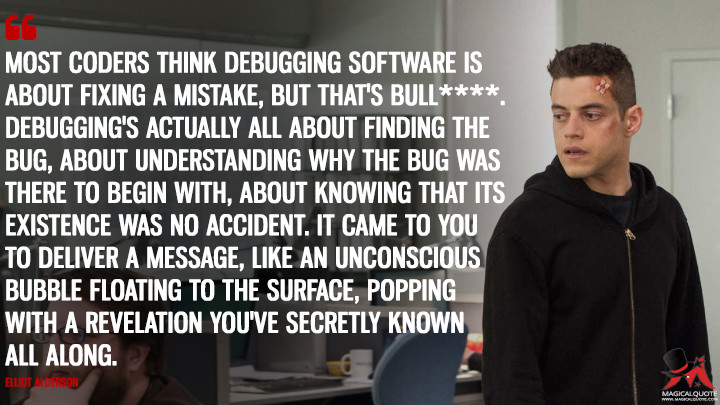
It is not about “fixing a mistake,” but “about understanding why the bug (mistake) was there to begin with, and knowing that its existence was no accident.”
So, it’s about understanding that the fact that the U.S. is a world empire “was no accident.” It’s “about understanding why” it became a world empire.
The statements, views and opinions expressed in this column are solely those of the author and do not necessarily represent those of this site. This site does not give financial, investment or medical advice.

This is good stuff and these two women are awesome!!
I essentially make about $9,000-$13,000 every month on the web. It’s sufficient to serenely supplant my old employments pay, particularly considering I just work around 10-13 hours every week from home. I was stunned how simple it was after I attempted it duplicate underneath web…..…… Www.Cash43.Com
Every economic crisis, is at its core a banking crisis. Currently banks and lenders are facing a crisis on 3 fronts. There is currently nearly 1.5 trillion in credit card debt in which delinquency and default rates are rapidly increasing. There is another 1.5 trillion in auto loans which are also facing accelerating delinquency and default rates. Finally, the banks are still sitting on trillions in long term (30yr) Treasuries purchased at near 0% interest that are now worth about 40% less than they paid for them. In short, the banks are in much more trouble than they were in… Read more »
Let’s not forget about China which is capitalist and also have problems. You speak about 1.5 trillion here and there while China is so big their problem have higher amounts. “In China, there are 60 to 90 million unsold apartments, which is remarkable. It probably represents housing for about one-sixth of the population, based on a rough back-of-the-envelope calculation. These are unsold apartments, and this gives a sense of the scale of the crisis. If these apartments were finished — although many of them never were — they would be worth something in the range of 13 to 18 trillion… Read more »
China saved the world in 2008. They are clearly not in position to do that again. Overall, China is in much better shape than the US and Europe, due to the fact that their economy is based on real tangible goods and services, where the US economy is primarily based on the FIRE economy, and government spending, which are both basically fraudulent schemes.. Another factor is China has a very good savings rate, where the US and Europe have basically no saving ethic whatsoever. Recessions / Depressions are fundamentally the destruction of money on a huge scale. When debts default,… Read more »
I agree with you, but what you are forgetting is that the rules of our world are capitalist, especially in the West. China is owned by Western oligarchs. These Western oligarchs control the world through the global economic and monetary systems, among other mechanisms. Consider the COVID response, the war in Ukraine, or the fact that China is introducing digital ID and digital currency—policies that align with what Western oligarchs desire. China is simply under the control of Western oligarchs, and so is Russia. While there are factions in the West— like neocons—who seek to destroy Russia and China, it… Read more »
The rules of our world are not capitalist. There is no real capitalism in the world today. Every major economy is a fascist system in which industry and government conspire to enslave the populus, and to steel all the wealth. What truly seperates the east from the west is the level of corruption in the system. In Russia, China, and the up and coming BRICKS nations, corruption is regulated by govenrment, and kept to managable levels alowing the working classes to gain by making improvements in prosperity and lifestyle. When oligharcs get too greedy, and act in ways that threaten… Read more »